

本文由 昱道景观 授权mooool发表,欢迎转发,禁止以mooool编辑版本转载。
Thanks Yudao Studio for authorizing the publication of the project on mooool, Text description provided by Yudao Studio.
昱道景观:早在2022年,设计团队与麓湖文旅一起在万宁麓湾牧场的现场,于高处远眺了碑头水库的近岸区域,有密林及原始状态的水塘分布。当时就想过是否能用同样轻质灵活的运营思路来激活这片区域。时间转眼到了2023年底,团队与麓湖文旅再次一起,踏入了近水库一侧的原生林中,而这时,已然是以项目踏勘的视角开始探寻这块场地了。
Yudao Studio:As early as 2022, the design team, alongside Luxelakes Culture Tourism, visited the Wanning Luxe form site. From a high vantage point, we observed the near-shore area of the Beitou Reservoir, characterized by dense woods and primitive ponds. At that time, we already considered whether the same light and flexible operational approach could be used to revitalize this area. Time quickly moved on to the end of 2023, when the team and Luxelakes Culture Tourism once again stepped into the native forest adjacent to the reservoir. However, this time, we began exploring the site with the perspective of a formal project survey.
▽场地原生状态 ©昱道景观

▽原始场地鸟瞰 ©孙庆

在探访之初,就被这片场地热带自然原生林的状态氛围打动,非常自然的原生力量的氛围,除了不易进入外,一切都很完美。团队特别希望这种自然的状态能得以保留,期待尝试较轻介入的方式去打开这片场地。
At the beginning of the visit, the team was deeply moved by the tropical natural primary forest of the site, which exuded a very natural and original power. Apart from being difficult to access, everything was perfect. The team particularly hoped to preserve this natural state and was eager to explore a lighter intervention approach to open up the area.
▽再探场地 ©昱道景观

项目位于万宁碑头水库畔,与之一路之隔的是前序落成运营的麓湾牧场。在这片椰林间,计划利用天然坑塘形成的三处大小各异的“水鸟乐园”,另有一处水塘则环水布置各色餐饮、互动业态,串联起各林下休闲空间,与坡地上的麓湾牧场遥相呼应,形成集特色南洋餐厅、水上运动、亲子研学、休闲度假、文化社交为一体的海岛丛林放野度假旅游目的地。
The project is located on the bank of Beitou Reservoir in Wanning, directly across the road from the Luxe form, which was completed and began operations previously. Within this coconut grove, the plan is to utilize the natural pits and ponds to create three “Water Bird Parks” of varying sizes. Another pond will feature various dining and interactive businesses arranged around the water, connecting all the under-forest leisure spaces. This layout echoes the Luxe form on the slope, forming an island jungle wilderness destination that integrates characteristic Nanyang restaurants, water sports, parent-child study tours, leisure vacations, and cultural socializing.
▽场地空中鸟瞰 ©河狸摄影

▽入口游客中心 ©河狸摄影


▽园区实景 ©河狸摄影

▽穿梭在园区雾森中的小朋友 ©河狸摄影

▽自然共生的园区场地©河狸摄影

初探 尝试
临水库一侧的椰园地中的几处水洼,吸引我们过去探访。极具热带风情的环状密林,像极一个个探出水库的生态密岛,充满奇趣与想象。
几处水洼连接着的水库是万宁的一座灌溉防洪功能水库,建成于上世纪七十年代。据已有资料记载,其水位在历史同期变化差异较大,近岸边时而深水时而滩涂。
Initial Exploration and Attempts
Several puddles in the coconut grove adjacent to the reservoir drew us in for exploration. The circular dense forest, rich in tropical style, greatly resembled ecological islands jutting out into the reservoir, full of wonder and imagination.
The reservoir connected to these puddles is a flood control and irrigation reservoir in Wanning, constructed in the 1970s. According to existing records, its water level varies significantly during the same historical periods, resulting in alternately deep water and mudflats near the shore.
▽富有变化的近岸消落带情况 ©昱道景观

故而我们将游览动线及互动内容安排到场地内,利用小水域的串联互动,形成封闭式管理的水禽互动区,环水最大布置游览路径的参观动线;对水库一侧开阔水面则布置水上运动内容,利用浮动码头以适应水位变化。
Therefore, we arranged the touring routes and interactive programs within the site, utilizing the connection and interaction of small water bodies to form a closed-management waterfowl interaction zone, maximizing the arrangement of the visiting circulation path around the water. For the open water surface adjacent to the reservoir, we arranged water sports activities, utilizing floating docks to adapt to water level changes.
▽暮色中的麓湾水集 ©河狸摄影

▽主游览动线上的休憩平台与水上舞台©河狸摄影

▽水域小鸟瞰©河狸摄影


▽餐厅一侧的内湖也是展开水上活动的场地 ©河狸摄影

▽玩水主力店外部环境 ©河狸摄影

▽池畔望向玩水店 ©河狸摄影

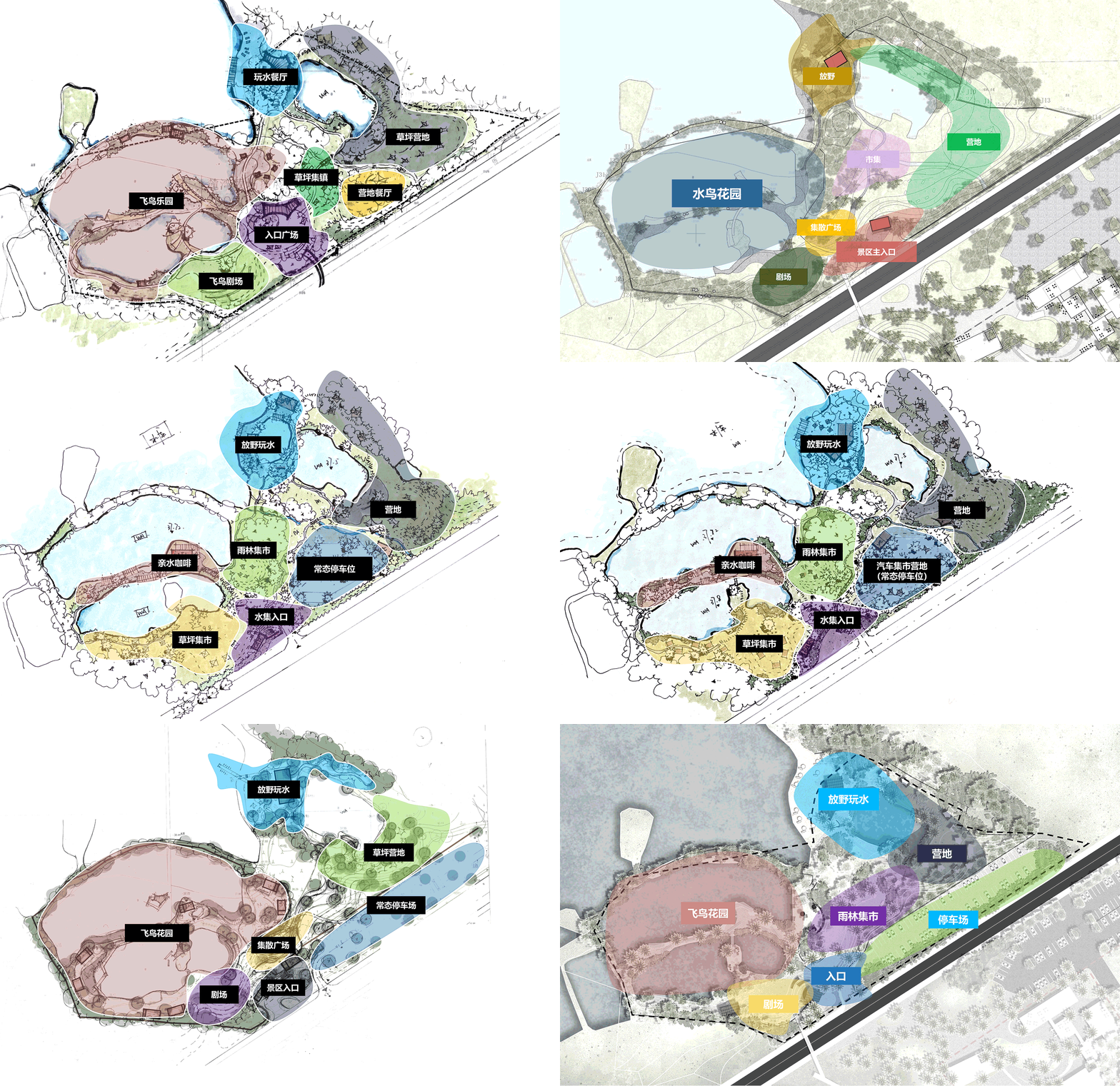
我们计划用在地化、轻介入的手法,让活化、轻质的业态串联布置在场地中。用轻量的改造呈现有画面感的复合经营空间。反复探讨各个运营业态在场地中的最优布置,以最大化发挥场地特性,实现复合运营的目的。
We planned to use localized, low-intervention methods to arrange active, lightweight businesses in series throughout the site. We used minimal renovation to present a visually engaging composite operational space. We repeatedly discussed the optimal arrangement of various operational businesses within the site to maximize the utilization of the site’s characteristics and achieve the goal of composite operation.
▽运营业态探讨过程 ©昱道景观
▽园区与动物互动的游客们 ©河狸摄影


▽市集活动中在园区游玩的游客们 ©麓湖文旅


思考 探索
规划设计水集时的初衷,是想延续在一期牧场的无边界互动的动物体验,利用滨水的优势,实现水中观赏,陆地互动的目的。我们通过在运营区域的边界及管理方式的探讨,在不大的园区内,通过对动物们的日间开放管理,夜间“各回各家”的方式,让游客在园区内的游览互动像是进入动物的家园做客,打破边界的束缚,去探索和体验互动。
Consideration and Exploration
The original intention when planning and designing the waterfront market was to continue the boundary-less, interactive animal experience established in the Phase I ranch, leveraging the waterside advantage to achieve underwater viewing and on-land interaction. Through discussions on the boundaries and management methods of the operational area, within the relatively small park, we adopted a strategy of open management for the animals during the day and “returning home” at night. This allows visitors to explore and interact as if they were guests visiting the animals’ homes, breaking free from boundary constraints.
▽跟动物互动的小朋友们 ©河狸摄影


水禽们的生活习性是非常依赖水域,并且擅长游泳、行走和飞行,为了它们在园区能更好生活,三处水塘相邻相依,中间由自然路径串联,环水布置了不同种群动物的“家”。当然,偶尔它们也会串门,也会大摇大摆到景区门口去看看今天又有哪些人类进家里来做客了。
The waterfowl are highly dependent on water bodies and are skilled at swimming, walking, and flying. To ensure they live well in the park, the three ponds are situated adjacent to each other and connected by natural paths, with the “homes” of different animal species arranged around the water. Of course, they occasionally visit each other, and sometimes even stroll grandly to the park entrance to see which humans have come to visit their homes today.
▽动物们在园区悠闲踱步 ©河狸摄影


▽鹈鹕在棚圈内望向湖面 ©河狸摄影

因为水禽们昼夜节律的生活习性,目前园区内饲养水禽多数为日行性动物,且有极强的群居习性。晨昏时分,种群的庇护所——“家”就非常重要,我们为此研究了适应当地气候的窝棚形式。遮风挡雨的同时透气通风,并且方便“套内直达泳池”。
Given the circadian rhythm and living habits of the waterfowl, most species currently housed in the park are diurnal animals with a strong social habit of living in groups. During dawn and dusk, the colony’s sanctuary—the “home”—becomes crucial. We therefore studied and developed shed forms adapted to the local climate. These provide shelter from wind and rain while remaining breathable and ventilated, and offer convenient “direct access to the pool from the unit.”
▽临水“别墅”,户内直达泳池 ©河狸摄影

▽陆栖动物区的圈舍 ©河狸摄影

▽湖畔的水豚之家 ©河狸摄影

我们为园区水禽设计了几种不同户型的“家”,有独栋,有公寓,有大宿舍,丰俭由禽。还为他们配备了食堂、小卖部,保证食物加工、备餐灯,医疗后勤兼顾的后勤保障。时而有不同的小动物们踱步到食品加工店门口去闲适的逛逛。
We designed several different “home” layouts for the park’s waterfowl, including detached houses, apartments, and large dormitories—offering options based on their preference and size. We also equipped them with a canteen and a small shop to ensure logistical support covering food processing, meal preparation, lighting, and medical care. Occasionally, different small animals can be seen strolling leisurely to the entrance of the food processing area for a look around.
▽散步的柯尔鸭 ©河狸摄影

▽水豚之家 ©河狸摄影

▽水鸭们的大公寓 ©河狸摄影

▽构造细节 ©昱道景观


在本次场地设计中,我们在研究多种材料和结构形式后,选定竹来作为主要材料,取材轻便,善于造型,环保耐用。在细节上,也尝试用彩色钢质构建提升稳固性和细节造型,作为放野中带着一定设计感的元素。利用本土元素进行设计和建造,也尽量贯彻低介入的设计原则,传承在地传统,新旧工艺互相穿插,生生不息。
In this site design, after studying various materials and structural forms, we selected bamboo as the main material due to its portability, suitability for shaping, and its eco-friendly durability. In terms of details, we also attempted to use colored steel structures to enhance stability and fine detailing, serving as elements of designed aesthetics within the wilderness setting. By utilizing local elements for design and construction, we endeavored to uphold the principle of low-intervention design, inheriting local traditions and allowing new and old craftsmanship to intertwine continuously.
▽设计选定竹来作为主要材料,取材轻便,善于造型,环保耐用 ©河狸摄


▽竹节构构架细节 ©河狸摄影


▽竹制构架细节 ©河狸摄影

在园区中,我们也尝试打破边界,在动线设计上,水禽的圈舍是沿环路布置,对外是游客通道,对内是圈内进入水池的“无障碍通道“,让游客不仅仅是观摩动物,也可以更好的亲近动物,体验日常小动物的生活动线。在环线中部路径交叉的区域,设置互动休憩的区域,草阶舞台、 叠坡发呆平台、水上舞台、沿路布置的小休憩区,都最大限度的提高游客体验路径中的参与性。
Within the park, we also attempted to break boundaries. In terms of circulation design, the waterfowl enclosures are arranged along the ring road. The outer side serves as the visitor pathway, while the inner side is a “barrier-free access” path leading from the enclosure directly into the water pool. This allows visitors not just to observe, but also to better approach the animals and experience the daily flow of their lives. In areas where paths intersect in the central part of the ring, interactive resting zones are set up, including grass-stepped stages, layered-slope relaxation platforms, a water stage, and small resting areas along the route, all maximizing visitor participation within the experience path.
▽园区公共座凳细节 ©河狸摄影

▽构架及时休憩空间也是打卡空间©河狸摄影

▽随坡而布的休憩平台©河狸摄影


延续 生长的设计
在本项目中,因为场地运营的周期及投建成本等控制因素,低成本打造氛围感是一项非常重要的设计前提。从在地出发,保留利用原生场地的元素,最大化融入场地,低介入的设计延续可持续的设计理念。
Continuous and Growing Design
In this project, due to controlling factors like the site’s operating cycle and investment costs, creating an atmosphere at a low cost was a critical design prerequisite. Starting from the local context, the design aimed to preserve and utilize the elements of the native site, maximize integration, and continue a sustainable design philosophy through low intervention.
▽项目入口LOGO与自然风格植被穿插 ©河狸摄影

整个区域内,原生植物品种繁多。场地边界处粗放经营的经济橡胶林已经呈现明显的自然野化状态,或野生或乡土的各类植物在自己合适的生态位上蔓延竞争,繁茂交融。因此,保留和利用现状野生植物,还原当地椰林村落的独特风貌成为我们植物设计的目标。在空间结构上,我们利用已经成型的橡胶林作为背景,模拟了当地村寨椰林散布其间的形式。在植物品种上,我们选择了贴近现状群落,能和现状完美交融的露兜树等品种。我们希望在这充满生命力的场景中,能实现在地自然的融入,并能更有韧性的向未来过渡。
Native plant species are abundant throughout the entire area. The extensively managed economic rubber plantation at the site’s boundary has already developed a distinctly naturalized, wild state, with various wild or indigenous plants spreading and competing in their appropriate ecological niches, creating lush integration. Therefore, the goal of our planting design became to preserve and utilize the existing wild vegetation, restoring the unique character of local coconut grove villages. Structurally, we used the established rubber forest as a backdrop, simulating the form of local villages where coconut groves are scattered within. For plant species, we selected varieties like Pandanus (screw pine), which closely resemble the existing community and can blend perfectly with the current environment. We hope that within this vibrant setting, we can achieve the integration of the local nature and transition into the future with greater resilience.
▽现场原生植被充满热带风情©昱道景观

▽现场水岸边原生植物群落©昱道景观

▽现场原生野菠萝与白鹭©昱道景观

▽现场原生乔木与寄生藤曼©昱道景观

▽现场小溪中自然生长的芋头我们也保留了下来©昱道景观

▽在原生橡胶林掩映下的餐厅,于近水岸处种植热带风情地被,打造氛围提升安全性©河狸摄影


▽开放后园区游览路径从原生林中穿过©河狸摄影

▽园区散步的动物©昱道景观

▽小径两侧保留了大量原生地被,与新种稙地被形成融合掩映©河狸摄影

▽新建空间与原生环境融合交织©河狸摄影


▽原生地被与新种稙地被交融和谐©河狸摄影

▽暮色中回望原生林背景下的园区大草坪区©河狸摄影

园区环境材料的利用上,我们则因地制宜,用轻质的原生在地材料做地面铺展。于大草坪区域采用盲管排水的方式实现无硬化基层,保证地面自然渗透、无积水的效果。整个园区利用环保耐久的砾石做园路,达到自然排水自然渗透。再局部区域利用竹木平台实现休憩空间的干燥耐候等使用条件。
For the utilization of environmental materials in the park, we adapted to local conditions, using lightweight native materials for ground paving. In the large lawn area, we used blind pipe drainage to avoid a hardened base layer, ensuring natural ground infiltration and preventing water accumulation. The entire park utilizes eco-friendly and durable gravel for pathways, achieving natural drainage and infiltration. In localized areas, bamboo and wood platforms were used to ensure dry and weather-resistant conditions for resting spaces.
▽园路与保留的大石头穿插咬合,也是动物们的散步道©河狸摄影

▽两侧水塘分别是不同的动物生活区©河狸摄影

▽入口广场采用散置砾石铺地增加松弛感,地面箭头提醒入口方向©河狸摄影

▽轻松的主题小品为园区增加活泼氛围©河狸摄影

▽动物与人类分列而行©河狸摄影

▽餐厅旁侧的自然小径©河狸摄影

▽材料清单©昱道景观

另外,在场地设计中,我们也完善设计了各元素主题下的场景串联运用,从餐饮、市集、艺展、研学、休闲活动等方面推导景观场景的落地实践。
Additionally, in the site design, we perfected the conceptual application of scene linkages under various thematic elements, deriving the practical implementation of landscape scenes from aspects such as dining, markets, art exhibitions, study tours, and leisure activities.
▽适应不同场景的园区小品©昱道景观

▽竹制外墙装饰的洗手间,橡木桶形态的洗手池增加趣味性©河狸摄影

▽各种原生形态的标识与符号穿插露出©河狸摄影


▽不同时段的项目入口©河狸摄影


后记
本次项目是一次非常特别的设计实施过程,对场地的最大尊重、轻介入的实现内容植入,用反复的推导和实验去完成园区布置,最终形成轻松和放松的形态。园区运营是一个持续的过程,会不断生长迭代,希望本次项目呈现的环境可以提供更为可持续的环境界面去支撑长时段的运营需求。
Postscript
This project was a very special design implementation process, involving maximum respect for the site, low-intervention content integration, and the use of iterative deduction and experimentation to complete the park layout, ultimately forming a light and relaxed environment. Park operation is an ongoing process that will continuously grow and evolve. We hope the environment presented in this project can provide a more sustainable interface to support long-term operational needs.
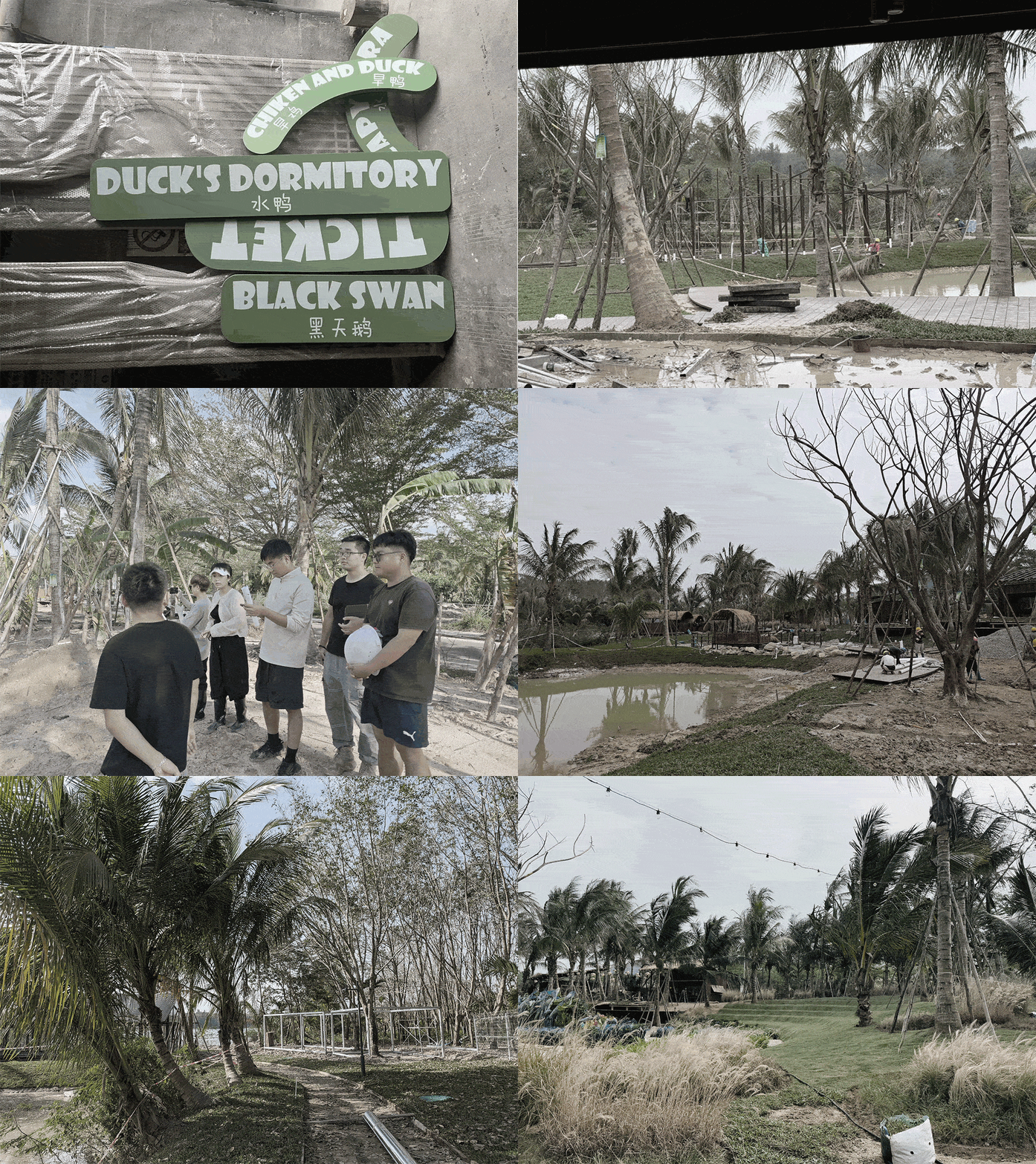
▽施工现场记录©昱道景观
▽项目总平©昱道景观

▽游客中心构造形态 ©昱道景观

▽各种样式的动物家园及功能用房©昱道景观

▽功能用房设计细节 ©昱道景观

▽园区节点构架造型及细节 ©昱道景观

项目名称:麓湾水集
项目地址:海南省万宁市麓湾二期
规划及景观设计:昱道景观
完成年份:2025年初
项目面积:20000㎡
主创团队:龙昱杉 赵鑫源 羊彦 周梦琳 陈世豪 冯裕雯 赵君 李彦坤 李源 罗震川
摄影版权:河狸摄影 麓湖文旅 昱道景观 孙庆
餐厅及玩水店建筑:口口建筑
景观施工:成都正茂园林景观工程有限公司
花境施工:麓湖园艺
业主单位及团队:成都麓湖文化旅游开发有限公司 / 罗希 贾文婧 高垒 梁馨尹 梁家豪
Project Name: Luxe Waterland
Project Address: Luwan Phase II, Wanning City, Hainan Province
Planning & Landscape Design: Yudao studio
Year of Completion: Early 2025
Project Area: 20,000 sqm
Chief Design Team: Long Yushan, Zhao Xinyuan, Yang Yan, Zhou Menglin Chen Shihao, Feng Yuwen, Zhao Jun, Li Yankun, Li Yuan, Luo Zhenchuan
Photography Copyright: HOLI , Luxelakes Culture Tourism, Yudao studio, Sun Qing
Restaurant and Water Play Establishment Architecture: Atelier OO
Landscape Construction: Chengdu Zhengmao Landscape Engineering Co., Ltd.
Flower Border Construction: Luxe Hort
Client Unit and Team: Chengdu Luxelakes Culture and Tourism Development Co., Ltd. / Luo Xi, Jia Wenjing, Gao Lei, Liang Xinyi, Liang Jiahao
“ 设计以最轻的介入,保留原始密林与坑塘,为水禽动物构建无边界家园,打造一座人与动物共游、与自然共生的放野乐园。”
审稿编辑:Maggie
更多 Read more about: 昱道景观


0 Comments