
本文由水石设计授权mooool发表,欢迎转发,禁止以mooool编辑版本转载。
Thanks SHUISHI for authorizing the publication of the project on mooool, Text description provided by SHUISHI.
水石设计:苏州当代美术馆雄踞于金鸡湖右岸滨湖公园带的核心腹地,不仅是金鸡湖畔重要的文化节点,更是连接苏州古典文脉与未来城市愿景的战略性地标。项目由国际顶级建筑事务所BIG (Bjarke Ingels Group) 担纲建筑设计,其景观设计旨在继承与延续苏州园林精神,用当代的景观语言创造建筑与自然的无界融合,赋予当下城市生活一种全新的自然文化体验。
SHUISHI: Nestled at the heart of the lakeside park belt on the southern bank of Jinji Lake, Suzhou Museum of Contemporary Art (Suzhou MoCA) is not only a pivotal cultural node by the lake but also a strategic landmark bridging Suzhou’s classical cultural heritage and its vision for a future-oriented city. The project’s architectural design is helmed by BIG (Bjarke Ingels Group), a world-renowned international architectural firm. Its landscape design seeks to inherit and carry forward the spirit of Suzhou classical gardens, creating a seamless integration of architecture and nature through contemporary landscape language, and endowing modern urban life with an entirely new cultural experience of nature.


01一场穿越时空的园林对话
——城市建筑与山水园林的当代融合
物我两忘:建筑与自然的“无界交融”。
设计的起点,不是“小桥流水”的复刻,也非“亭台楼阁”的再现,而是溯流而上,探寻苏州园林深处那一脉“物我两忘、天人合一”的精神本源。
A Garden Dialogue Across Time and Space
Contemporary Integration of Urban Architecture and Landscape Gardens
The Unity of Self and Surroundings: Seamless Fusion of Architecture and Nature
The design does not aim to replicate the classic “small bridges over flowing water” or reproduce “pavilions and towers”. Instead, it traces back to the profound spiritual essence of Suzhou gardens—the unity of self and surroundings, and harmony between human and nature.
▽项目区位

▽融入环境的当代美术馆

景观将传统山水意象解构、抽象、重构——让巨大的公共建筑不再以体量凌驾于自然之上,而是悄然消隐于山水语境之中。于是,当代的钢铁骨架与古典的山水精神在此相遇,开启一场跨越千年的对话:一边是前卫的构造逻辑,一边是本真的自然哲思。
The traditional landscape imagery is deconstructed, abstracted and reconstructed in the design: the imposing public building no longer dominates nature with its volume, but fades gently into the landscape context. Thus, the contemporary steel structure meets the classical spirit of mountains and rivers here, opening a dialogue spanning thousands of years—on one side is avant-garde structural logic, on the other is the authentic philosophical thinking of nature.
▽空间布局
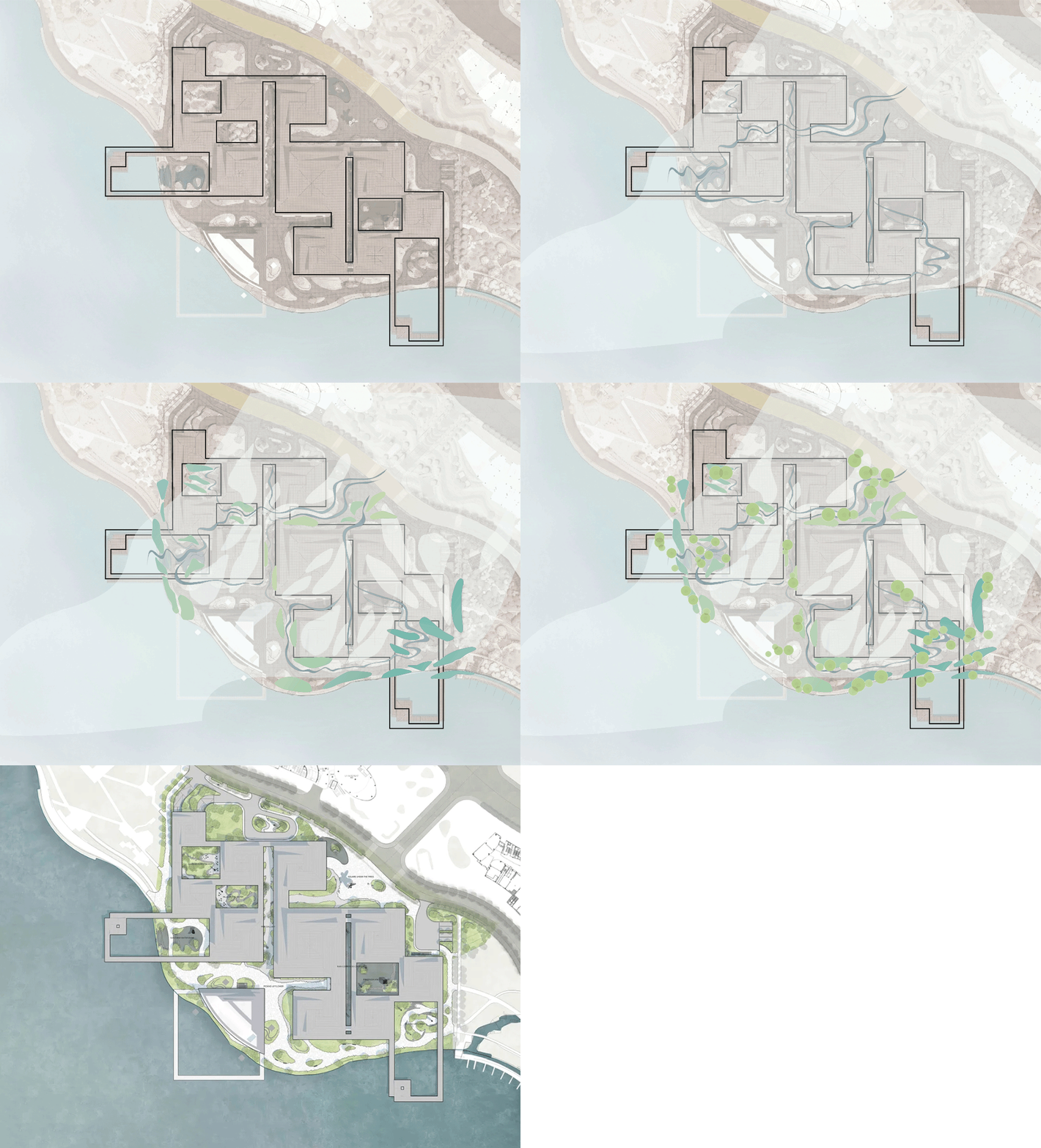
“路径”与“视线”,成为这场对话的转译语言。园林中“移步换景”的妙趣,被提炼为多变的动线与交织的廊道——它们取代了传统的游廊,却保留了那份“步移景异”的惊喜。透过精心推敲的框景与透景,建筑本身也被“借”入体验之中,成为风景的一部分。此时,“山水”不再只是假山叠石的具象呈现,而升华为起伏的建筑体量、流转的空间韵律以及光影在墙面上的无声游走。
Circulation flow and sightline become the translational languages of this dialogue. The delightful appeal of “changing views with every step” in classical gardens is refined into a dynamic circulation network and interwoven corridors, which replace traditional covered walkways yet retain the pleasant surprise of ever-shifting scenery. Through carefully crafted framed views and borrowed vistas, the building itself is incorporated into the visitor experience, becoming an integral part of the landscape. At this moment, “mountains and rivers” are no longer just the physical presentation of artificial rockeries and stacked stones, but elevated to the undulating architectural volume, the flowing spatial rhythm, and the silent dance of light and shadow on the walls.


景观的介入,让建筑不再是孤立的单体,而是生长为一片有机的聚落。镜水环绕于建筑脚下,天光穿过树冠洒落水面,波光粼粼映上墙面——建筑的实体感被层层削弱,最终化为一只承载光影与时间的容器,静默地容纳着自然的流转。
而观者,不再是画外的旁观者。当他们穿行其间,身体随动线起伏,目光随视线延展,光影随脚步变幻——便已悄然完成了一场与空间、与自然的沉浸式对话。这正是“物我两忘”在当代的回应:人不再是自然的征服者或旁观者,而是漫游其中、与之共生的一部分。
The intervention of landscape design transforms the building from an isolated monolith into an organic cluster. A mirror-like lake encircles the base of the building; skylight filters through the tree canopy onto the water surface, and the shimmering ripples cast reflections on the walls—the solidity of the building is weakened layer by layer, ultimately turning it into a vessel that holds light, shadow and time, quietly embracing the ebb and flow of nature.
Visitors are no longer mere onlookers outside the scenery. As they wander through the space, their bodies move with the undulating circulation, their gazes extend along the sightlines, and light and shadow shift with their steps—they thus quietly engage in an immersive dialogue with the space and nature. This is the contemporary interpretation of the “unity of self and surroundings”: humans are no longer conquerors or onlookers of nature, but part of it, roaming and coexisting in harmony.
▽城市建筑与山水园林的当代融合


02一座“打开的苏州园林”
——兼具开放与内省的复合型空间
这里没有围墙,美术馆与繁华闹市之间,以一道柔性的景观边界完成了一场巧妙的对话:既分隔,又连接;既相望,又相融。美术馆因而得以“融入闹市,也藏入闹市”——路径的婉转牵引与视线的精心渗透,将公园的盎然生机引入建筑内部,同时又将美术馆的艺术气息向外延展,直至湖滨。流动、渗透、无界,成为这片场所的空间语言。
An “Open Suzhou Garden”
A Composite Space Blending Openness and Introspection
There are no enclosing walls here. Between the art museum and the bustling downtown lies a gentle landscape boundary that fosters a delicate dialogue: it separates yet connects, stands in distant view yet merges as one. Hence, the art museum is able to “blend into the downtown and hide in it at the same time”. The winding circulation and carefully designed sightline penetration draw the vibrant vitality of the park into the building, while extending the artistic aura of the museum outward all the way to the lakeshore. Fluidity, penetration and boundlessness become the spatial language of this place.

美术馆的景观如同一层“过滤器”,将都市的喧嚣悄然沉淀。在金鸡湖畔的当代语境下,它不再追求隐秘与避世,而是以开放的姿态面向城市与自然。景观用留白的“空”,去容纳艺术与人流的“满”——空处生境,满处见韵。古典的“天人合一”,在此刻被重新诠释为一种人与自然、建筑与环境的高度和谐与共生。
The landscape of the art museum acts as a “filter”, quietly calming the hustle and bustle of the city. In the contemporary context of Jinji Lake, it abandons the pursuit of seclusion and isolation, and faces the city and nature with an open posture. The landscape uses the “emptiness” of negative space to accommodate the “fullness” of art and human flow—vitality emerges from emptiness, and charm shines in fullness. The classical concept of “harmony between human and nature” is reinterpreted here as a high degree of harmony and symbiosis between humans and nature, architecture and the environment.
▽开放与内省的复合型空间


巧于因借:城市语境下的借景之道。
美术馆的另一种“打开”,在于它对周遭环境的收纳与因借。一池静水,如镜面般铺展,将金鸡湖水岸的风景悄然导入园中。远山的湖光、变幻的天色、起伏的城市天际线——皆被悉数“借”入这片园子,成为景观的一部分。水面映照着天光云影,也映照着建筑与人的活动,让美术馆的边界在视觉中无限延展,最终消融于湖天一色之间。借景,不再是古典园林中遥望他处的技法,而成为当代语境下,空间与城市、建筑与自然彼此渗透的哲思之道。
Skillful View Borrowing: The Art of Incorporating Surroundings in an Urban Context
Another dimension of the museum’s “openness” lies in its integration and borrowing of the surrounding environment. A still lake stretches out like a mirror, quietly drawing the scenery of Jinji Lake’s waterfront into the garden. The lake light of distant hills, the changing sky, the undulating urban skyline—all are incorporated into the garden as part of the landscape. The water surface reflects the sky, clouds and light, as well as the activities of the building and people, making the boundaries of the art museum extend infinitely in the visual sense and ultimately blend into the seamless integration of sky and lake. View borrowing is no longer just a technique of gazing at distant scenery in classical gardens, but a philosophical approach to the mutual penetration of space and the city, architecture and nature in the contemporary context.
03深远意境的空间营造
——多重庭院叠合递进的空间叙事
设计提取传统园林“庭院深深”的空间原型,以当代手法加以转译。建筑连廊如“丝带”般轻盈流动,既勾勒出建筑的轮廓,也在不经意间围合出一重重尺度亲昵、彼此渗透的庭院空间。
当你驻足于某一庭院,视线常被连廊的开口牵引——那一角绿意、那一抹湖光,隐约可见,却又不尽然。这正是对“庭院深深深几许”的现代诠释:以流动的顶棚替代封闭的院墙,以视线的渗透营造无尽纵深。
正如BIG创始人所描述的穿行体验:你时而沉浸在展厅的画意中,时而信步于庭园感受湖风拂面,时而登临高处,远眺城市天际线的起伏。这种身心的转换与景致的递进,恰好契合了童寯先生在《江南园林志》中所概括的园林三昧——“疏密得宜、曲折尽致、眼前对景”。
Forging a Profound Spatial Artistry
A Narrative of Overlapping and Progressive Courtyards
The design extracts the spatial prototype of “deep, layered courtyards” from traditional gardens and reinterprets it with contemporary techniques. The building’s covered walkways flow lightly like “silk ribbons”, outlining the building’s contours and inadvertently enclosing a series of intimate, interpenetrating courtyard spaces of varying scales.
When standing in a courtyard, the visitor’s sight is often guided by the openings of the covered walkways—a glimpse of greenery, a sliver of lake light, visible yet not fully revealed. This is the modern interpretation of the poetic line “How deep the layered courtyards go!”: the closed courtyard walls are replaced by flowing canopies, and the endless depth is created through the penetration of sightlines.
As the founder of BIG described the experience of wandering through the space: one moment you are immersed in the artistic imagery of the exhibition halls, the next you stroll through the courtyards feeling the lake breeze on your face, and then you climb to a high place to overlook the undulating urban skyline. This transformation of body and mind, and the progression of scenery, perfectly align with the three essential principles of gardens summarized by Tong Jun in The Gardens of Jiangnan: “Well-proportioned density, exquisite twists and turns, and captivating views at every glance”.

引入-画廊广场
以绿岛空间为原型,柔化广场边界轮廓,自然流线型人流动线组织,形成建筑与景观空间的自然衔接,作为美术馆的“第一界面”,该空间承载着“自然×艺术×生活”的核心表达,为参观者构建起从城市喧嚣步入艺术静谧的过渡场所,未来也将承载艺术户外展场的功能,实现自然景观与艺术体验的融合。
Gallery Plaza: The Introductory Space
Modeled on a green island, the plaza softens the boundary contours and organizes a natural, curvilinear pedestrian flow, forming a seamless connection between architecture and landscape. As the “first interface” of Suzhou MoCA, this space embodies the core expression of “Nature × Art × Life”, serving as a transitional zone for visitors to move from the hustle of the city to the tranquility of art. In the future, it will also function as an outdoor art exhibition space, realizing the integration of natural landscape and artistic experience.
▽画廊广场生成概念图
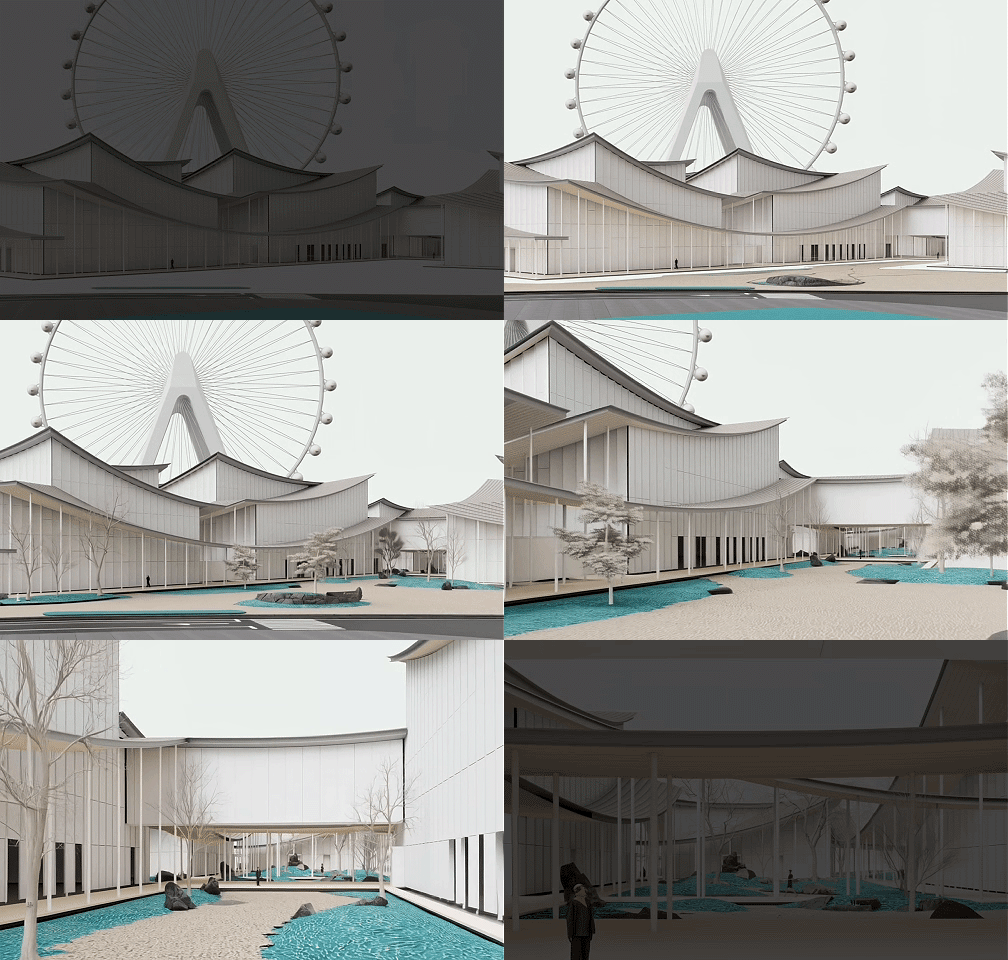
▽从城市喧嚣渐渐步入静谧的艺术空间


穿廊-松影画廊
依托狭长的建筑长廊,以形态各异的置石和造型苍劲的松树构建空谷穿行的自然体验,强化出空间的纵深层次和深远意境。
Pine Shadow Gallery: The Corridor Walk
Leaning on the narrow building corridor, this space features exotic ornamental stones and vigorous pines to create the experience of walking through a mountain valley, enhancing the spatial depth and profound artistic conception.
▽松影画廊生成概念图
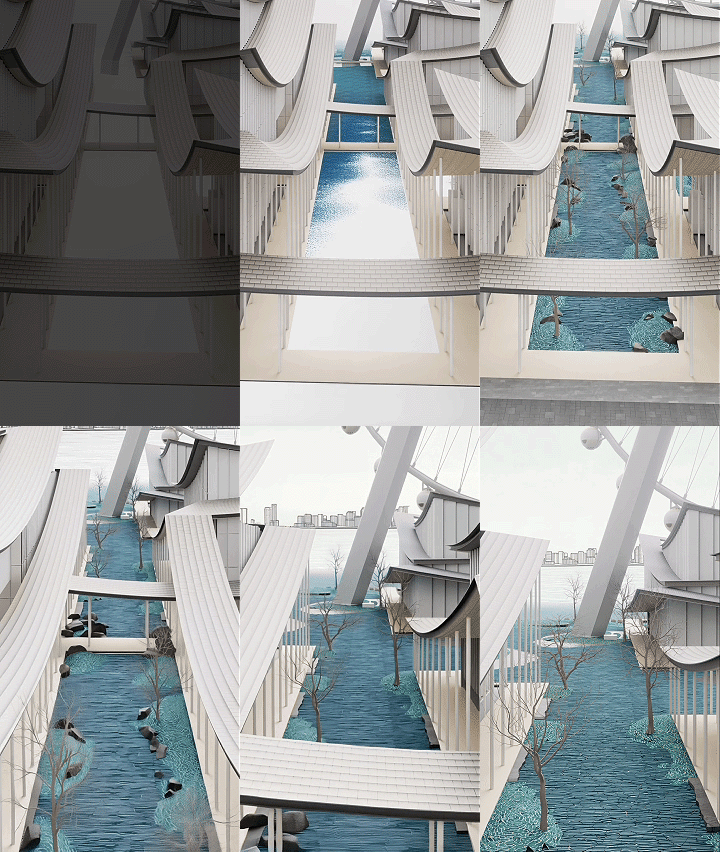
▽山谷穿行的立体园林


观山-浮翠庭院
作为多功能区的核心庭院,以山石与绿谷交错布局为核心,片石铺装蜿蜒穿梭其中,将东方山水画的意境之美融入庭院空间,为观者提供沉浸式的山水体验,实现自然景观与人文审美的深度融合。
Emerald Floating Courtyard: The Mountain-Viewing Courtyard
As the core courtyard of the multi-functional area, it centers on the interlaced layout of mountain stones and green valleys, with winding flagstone paving weaving through it. It integrates the artistic conception of oriental landscape painting into the courtyard space, providing visitors with an immersive mountain and water experience and achieving an in-depth fusion of natural landscape and humanistic aesthetics.
▽浮翠庭院生成概念图

蜿蜒的片石铺装模拟水波粼粼的舒展肌理,起伏的绿谷呼应山水画的皴擦笔触,错落的山石形成空间留白,天光透过枝叶洒下,在墙面形成丰富的光影层次,将山水意境与现代建筑空间相融合。
The winding flagstone paving mimics the stretching texture of shimmering water ripples, the undulating green valleys echo the texture strokes of landscape paintings, and the scattered mountain stones create negative space in the layout. Skylight filters through the branches and leaves, casting rich layers of light and shadow on the walls, blending the artistic conception of mountains and rivers with modern architectural space.
▽浮翠庭院


多变的动线与交织的廊道,透过精心推敲的框景与透景,建筑本身也被“借”入体验之中,成为风景的一部分。此时,“山水”不再只是假山叠石的具象呈现,而升华为起伏的建筑体量、流转的空间韵律以及光影在墙面上的无声游走。
With dynamic circulation and interwoven corridors, and through carefully crafted framed views and borrowed vistas, the building itself is incorporated into the visitor experience, becoming an integral part of the landscape. At this moment, “mountains and rivers” are no longer just the physical presentation of artificial rockeries and stacked stones, but elevated to the undulating architectural volume, the flowing spatial rhythm, and the silent dance of light and shadow on the walls.


坐林-雾隐竹林
庭院以“竹”为核心景观元素,结合空间功能需求,采用疏密有致的种植方式,实现“可观可游”的双重体验。竹林天然放大光影变化,进一步丰富空间层次,营造出静谧清幽的空间氛围。
Bamboo Grove Veiled in Mist: The Woodland Retreat
Taking bamboo as the core landscape element, the courtyard adopts a sparse-dense planting pattern tailored to spatial functional needs, achieving a dual experience of “appreciation and rambling”. Bamboo groves naturally amplify the changes of light and shadow, further enriching the spatial layers and creating a quiet and serene atmosphere.
▽雾隐竹林生成概念图
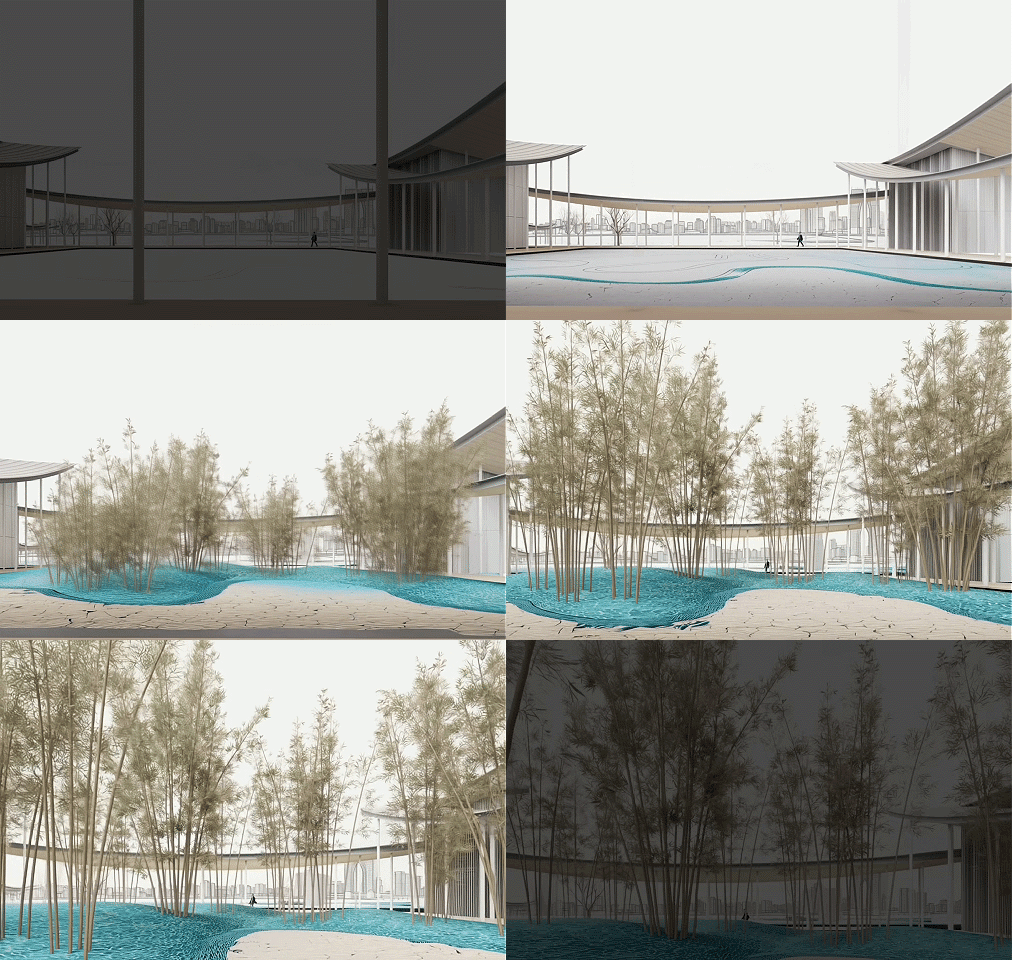
▽静谧清幽的竹林空间


归心-细雨莲廊
展馆区长廊设计采用“留白”手法,打造纯粹的水廊空间,睡莲点缀水面,涟漪微动之间,营造出空灵静谧的空间质感,为观者提供一处沉淀心绪、感受艺术与自然之美的心灵归处。
Lotus Corridor in Misted Rain: The Spiritual Haven
The corridor in the exhibition area is designed with the technique of “negative space”, creating a pure water corridor with water lilies dotting the surface. The gentle ripples foster an ethereal and tranquil spatial texture, providing visitors with a spiritual haven to calm their minds and appreciate the beauty of art and nature.
▽细雨莲廊生成概念图
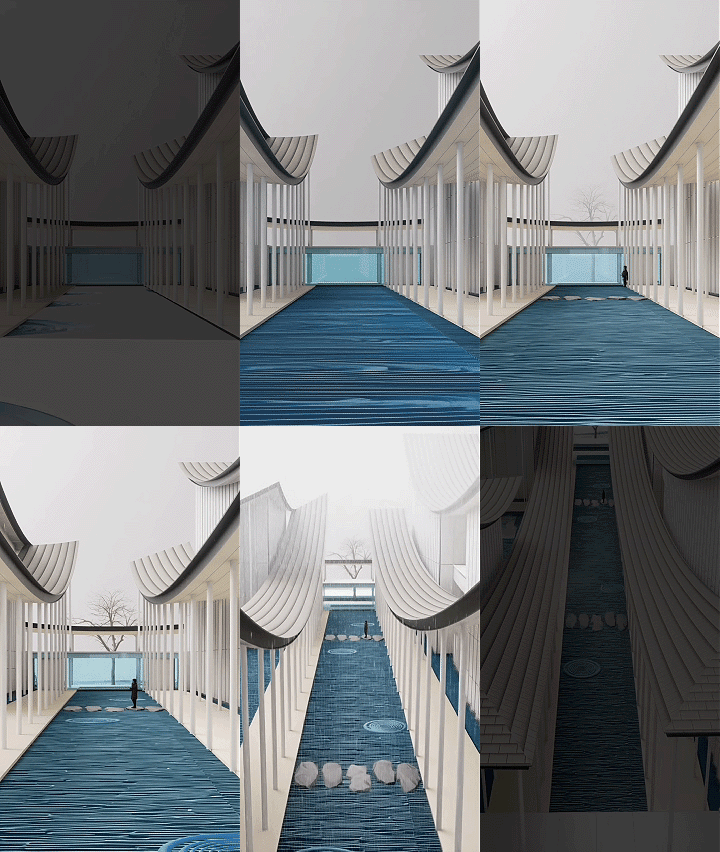
▽纯粹的水廊空间


廊下空间以水面为媒介,将建筑线条的硬朗与水面的柔美相融合,睡莲点缀水面更显宁静雅致,风动涟漪带动建筑倒影,以极简设计传递出“天人合一”的东方美学内核,让观者在静谧中感受艺术。
With water as the medium, the under-corridor space blends the ruggedness of architectural lines with the softness of the water surface. The water lilies dotting the water add to the serenity and elegance; the ripples stirred by the wind sway the building’s reflections. The minimalist design conveys the core of oriental aesthetics—the harmony between human and nature, allowing visitors to experience art in tranquility.
▽空灵静谧的艺术空间


静悟-谧境水院
作为展馆区的核心,景观以“空”为核心思想,留白的水庭之中孤植数株大树,姿态各异的乔木与景石、水面相互映衬,呈现出素雅恬淡的空间格调,传递出东方美学中“宁静致远”的核心意境,这里是观者可以沉思静悟的寂静之所。
Tranquil Water Courtyard: The Space for Meditation
As the core of the exhibition area, the landscape is designed with the concept of “emptiness” at its heart. A few large trees are planted alone in the minimalist water courtyard, and the exotic trees set off against the ornamental stones and water surface, presenting an elegant and quiet spatial style and conveying the core oriental aesthetic concept of “tranquility leads to far-reaching thoughts”. This is a quiet place for visitors to contemplate and meditate.
▽谧境水院生成概念图

▽谧境水院


水面如镜,将建筑轮廓、乔木枝桠、天光云影尽数收纳,远处摩天轮的弧线成为空间的点缀,形成“动与静”“硬与柔”的巧妙平衡。空间设计摒弃繁复装饰,以极简手法营造出素雅纯粹的景观氛围,让参观者在静思中感受艺术与自然的共生之美。
The water surface is as smooth as a mirror, reflecting the building’s contours, the tree branches, the sky and cloud shadows in their entirety. The arc of the distant Ferris wheel serves as an ornament in the space, creating a delicate balance between “motion and stillness”, “ruggedness and softness”. The spatial design abandons complicated decorations and adopts minimalist techniques to create an elegant and pure landscape atmosphere, allowing visitors to feel the symbiosis of art and nature in quiet contemplation.
▽宁静致远的空间意境


望水-夕照水岸
水天一色的景观格局,将金鸡湖湖面及对岸城市天际线尽收眼底;水榭处回望,建筑掩映于自然绿植之中,与水中倒影形成虚实相映的景观效果,实现建筑、自然与城市的共生共荣。
Waterfront at Dusk: The Lake-Viewing Bank
Boasting a landscape of seamless sky and lake, it offers an unobstructed view of Jinji Lake’s surface and the urban skyline on the opposite bank; looking back from the waterside pavilion, the building is hidden among natural green plants, forming a virtual-real interactive landscape effect with its reflection in the water, realizing the symbiosis and prosperity of architecture, nature and the city.
▽夕照水岸生成概念图
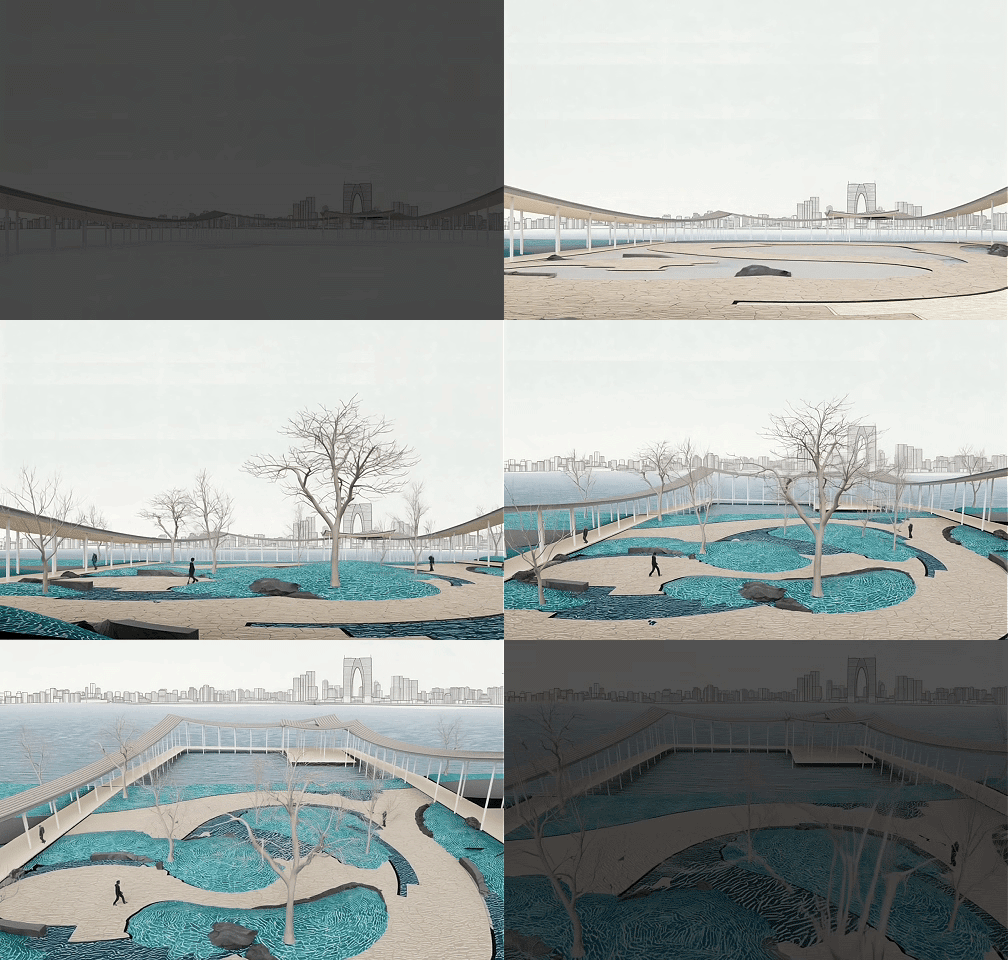
▽与城市和自然共生共荣


▽水天一色的无界空间


夕阳漫照之下,花庭草木承载着自然的温柔,蓬松草穗缀以光影,曲径顺着地形肌理蜿蜒延伸。此处延续建筑与自然“刚柔相济”的设计理念,起伏草坡模拟自然肌理,与连廊、建筑形成景观呼应,打造出兼具自然野趣与艺术质感的滨水花境空间。
Bathed in the setting sun, the flower courtyard and vegetation embrace the gentleness of nature, with fluffy grass ears dotted with light and shadow, and winding paths stretching along the topographical texture. This space continues the design concept of “the integration of hardness and softness” between architecture and nature, with undulating grass slopes mimicking natural textures and forming a landscape echo with the covered walkways and buildings, creating a lakeside flower border space that combines natural wild interest with artistic texture.
▽夕阳漫照,驻足成景


04 材料的诗学
——前卫与本真的对话
景观提炼苏州园林最为灵动的两种元素——“水”之灵与“石”之拙,作为贯穿设计的母题。这一虚一实、一动一静,恰如东方园林哲思中的阴阳相生:水以柔克刚,石以拙藏锋。
The Poetics of Materials
A Dialogue Between Avant-Garde and Authenticity
The landscape design extracts two of the most vivid elements of Suzhou classical gardens—the grace of water and the simplicity of stone—as the recurring motifs throughout the design. One intangible and one tangible, one dynamic and one static, they echo the yin-yang interdependence in the philosophical thinking of oriental gardens: water softens hardness with its gentleness, and stone conceals sharpness with its simplicity.
▽特选景石的研磨


水的静美,悄然调和了建筑钢铁骨架的理性与冷峻。它不张扬,却让光与色在波光潋滟间自由流转——朝晖夕阴,云影天光,皆因这一池静水而变得可触可感。水面如镜,映照着建筑的棱角与天际的轮廓,将硬朗的几何线条融化在一片温润之中。
The serene beauty of water subtly tempers the rationality and coldness of the building’s steel structure. Unassuming yet vivid, it allows light and color to flow freely on the shimmering ripples—the morning glow and evening shade, the clouds and skylight, all become tangible through the still lake. The mirror-like water surface reflects the building’s edges and the skyline’s contours, melting the rigid geometric lines into a gentle embrace.
▽石与园的融合


▽铺装的衔接与过渡

石的拙朴,则以天然的质感为场地奠定沉稳的根基。它中和了玻璃与钢材的透明锐利,用亿万年形成的肌理,与人工的精致形成一种跨越时间的对话。石可起居——它不仅是景观的构成,更是身体的延伸。当你坐于石上、倚于石畔,便已悄然“入画”,如同古人于山林间随意栖居,身体与自然再无隔阂。
It neutralizes the transparency and sharpness of glass and steel, and engages in a time-transcending dialogue with man-made exquisiteness through its textures forged over hundreds of millions of years. Stone is not only a component of the landscape but also an extension of the human body for rest and repose. When sitting on a stone or leaning against it, one quietly becomes part of the scenery, just like the ancient literati who dwelt freely in the mountains and forests, with no boundary between the body and nature.
▽倚于石畔,悄然入画

水与石,与建筑中那些标志性的现代材料——钢的冷峻、玻璃的透明——形成强烈对比,又在微妙间达成调和。它们如一对默契的舞者,刚柔相济,虚实相生,共同编织出一幅既当代又东方的山水长卷,凝固为时间与光影交织的温度。
Water and stone form a striking contrast with the iconic modern materials of the building—the coldness of steel and the transparency of glass—yet achieve a delicate harmony with them. Like a pair of tacit dancers, they blend hardness and softness, virtual and real, jointly weaving a contemporary yet oriental landscape scroll, frozen as a moment of warmth where time, light and shadow intersect.
▽景墙现场施工

▽景石造型研究与现场安装

05 植物的情愫
——拟人化的精神象征
延续古典园林的“比德”思想,植物在此不仅作为绿化点缀,更成为心灵意象的精神寄托。它们以各自的姿态与品格,为空间注入温度与灵魂。
The Sentiment of Plants
Anthropomorphic Spiritual Symbols
Carrying forward the concept of moral symbolization through plants in classical gardens, plants here are not merely green ornaments but spiritual sustenance for the inner world. With their unique postures and moral connotations, they infuse the space with warmth and soul.

松——美术馆入口处,孤植黑松苍劲挺拔,既寓迎客之意,亦彰风骨之姿。因这一棵松,建筑陡然生出一分野逸,仿佛与远山的峭壁遥相呼应。转入松廊,数株油松密植其间,与悠长的连廊相依相生,穿行其下,恍若步入一道山间不知去向的松下小径——光影斑驳,松涛在耳。
Pine: A solitary black pine stands tall and vigorous at the entrance of Suzhou MoCA, symbolizing both the welcome to visitors and the integrity of character. This single pine tree endows the building with a touch of wild grace, as if echoing the sheer cliffs of distant mountains. Stepping into the pine corridor, several Chinese red pines are densely planted alongside the long covered walkway. Wandering beneath them, one feels as if walking along a mountain path lost in a pine forest—dappled with light and shadow, the soughing of the pines lingering in the ears.

竹——水岸之隅,丛植的竹子高洁清雅,静静地伫立在庭院一侧。风过时,竹影摇曳,湖光透过疏朗的竹叶洒落一地斑驳,将水面粼粼的波光引入静谧的空间。此处宜独坐,宜冥想,宜与自己的内心相对。
Bamboo: Clumps of bamboo stand noble and elegant at the waterfront, quietly by the courtyard side. When the wind blows, the bamboo shadows sway, and the lake light filters through the sparse bamboo leaves, casting dappled light on the ground and drawing the shimmering water ripples into the quiet space. This is a place for solitary sitting, meditation and inner reflection.

梅——傲骨凌寒的梅花,藏于窗前或路径转角处,不张扬,却总在不经意间映入眼帘。冬末春初,当寒意未退,枝头已有暗香浮动,那是坚韧的象征,亦是报春的先声,为空间带来一缕生机与希望。
松之刚、竹之清、梅之傲——这“岁寒三友”以拟人化的品格融入景观,让植物成为有灵的存在,也成为连接现代人与传统文人精神的那座无声的桥。
Plum Blossom: The unyielding plum blossom, blooming defiantly against the cold, is hidden by the windows or at the turning of the paths, unassuming yet always catching the eye inadvertently. In late winter and early spring, when the cold lingers, a faint fragrance drifts from the branches—it is a symbol of perseverance, a harbinger of spring, and a breath of vitality and hope for the space.
The rigidity of pine, the elegance of bamboo and the unyielding spirit of plum blossom—the Three Friends of Winter (a classic oriental symbol representing perseverance and integrity) are integrated into the landscape with anthropomorphic moral connotations, making plants spiritual beings and a silent bridge connecting modern people with the spiritual world of ancient literati.
▽松与建筑对话

▽竹影摇曳

06 匠心所至
——长周期下的协同诗篇
每一处意境落成的背后,都有一份看不见的匠心在默默支撑。为实现这一高标准的愿景,项目倚赖的不仅是设计的灵感,更是卓越的匠心与全周期的精细管理。面对跨越数年的建设周期,以及国际建筑事务所、景观顾问、当地施工单位等多方参与的复杂格局,景观设计以严格的现场把控与全周期的协同机制,织就一张无形的协作之网。
The Dedication of Craftsmanship
A Collaborative Epic Forged Over Time
Behind every exquisite artistic conception lies the silent dedication of meticulous craftsmanship. To realize this high-standard vision, the project relies not only on design inspiration but also on outstanding craftsmanship and full-cycle refined management. Faced with a construction period spanning several years and a complex collaboration framework involving an international architectural firm, landscape consultants, local construction units and other parties, the landscape design team has woven an invisible network of collaboration through strict on-site supervision and a full-cycle coordination mechanism.
▽严格的现场把控

从第一块石料的选材,到最后一株植物的定植,每一处细节都经历反复推敲与现场校准。石头的纹理是否呼应了远山的脉络?树木的姿态是否契合了风的方向?光影在何时何地洒落最为动人?这些“写意”的追问,最终都要在“落地”的瞬间得到回答。
From the selection of the first stone to the planting of the last plant, every detail has undergone repeated deliberation and on-site calibration. Does the texture of the stone echo the veins of distant mountains? Does the posture of the tree align with the direction of the wind? Where and when does the light and shadow fall most beautifully? These poetic inquiries ultimately find their answers in the actual construction.
▽选石与施工现场

正是这种长周期、多线程的精密协作,让图纸上的意境得以一寸寸生长为现实——让松的风骨、竹的清雅、水的静美,不再是抽象的概念,而成为可游、可居、可感的空间诗篇。匠心所至,细节之中见天地。
It is this long-cycle, multi-threaded precise collaboration that allows the artistic conception on the blueprints to take shape inch by inch in reality—turning the integrity of pines, the elegance of bamboo and the serene beauty of water from abstract concepts into a navigable, habitable and perceptible spatial poem. Where craftsmanship prevails, the world reveals itself in the details.
▽施工现场跟踪

07 后记:对话的未尽之言
——本真性的回归
这场跨越千年的对话,最终的落点,或许是两个字——本真。
苏州园林的本真,不在飞檐斗拱的样式里,也不在叠山理水的技法中。它藏于更深处:是对天地秩序的敬畏,对自然生机的亲近,是古人将身心安放于山水之间的智慧——一种宇宙观与自然观的凝结。
苏州当代美术馆无意复刻传统样式,而是以抽象与重构,剥离了形式的附着,却保留了那份最核心的尊重——对自然的尊重,对空间感知的敏感,对人居环境的思考。
于是,当观者穿行于庭园廊道之间,目光掠过水光、松影、竹韵——一种熟悉的江南诗意悄然浮现。那不是对某座园林的记忆,而是对一种生活方式的共鸣;那不是风格的辨认,而是与千年文人的心意相通。
这或许便是“时空对话”最深处的一层:不是让传统“复活”,而是让本真“回归”。让每一位步入其中的人,在行走与驻足之间,与天地重逢,与自己相遇。
Postscript: The Unfinished Dialogue
A Return to Authenticity
The ultimate destination of this time-transcending dialogue may be summed up in two words: authenticity.
The authenticity of Suzhou classical gardens does not lie in the styles of overhanging eaves and bucket arches, nor in the techniques of artificial mountain building and water layout. It lies in a deeper realm: the reverence for the order of heaven and earth, the closeness to the vitality of nature, and the ancient wisdom of placing the body and mind in the mountains and rivers—a condensation of a cosmic outlook and a view of nature.
Suzhou MoCA has no intention of replicating traditional styles. Instead, through abstraction and reconstruction, it peels off the superficial formal trappings while preserving the most core respect: respect for nature, sensitivity to spatial perception, and reflection on human living environments.
Thus, as visitors wander through the courtyards and corridors, their gazes gliding over the water light, pine shadows and bamboo charm—a familiar poetic beauty of the Jiangnan region emerges quietly. It is not a memory of a specific garden, but a resonance with a way of life; it is not a recognition of a style, but a spiritual connection with the literati of a thousand years.
This may be the deepest layer of the “dialogue across time and space”: not to “revive” tradition, but to “return” to authenticity. To let every person who steps into this space reunite with heaven and earth, and meet their true self, in every step and every pause.
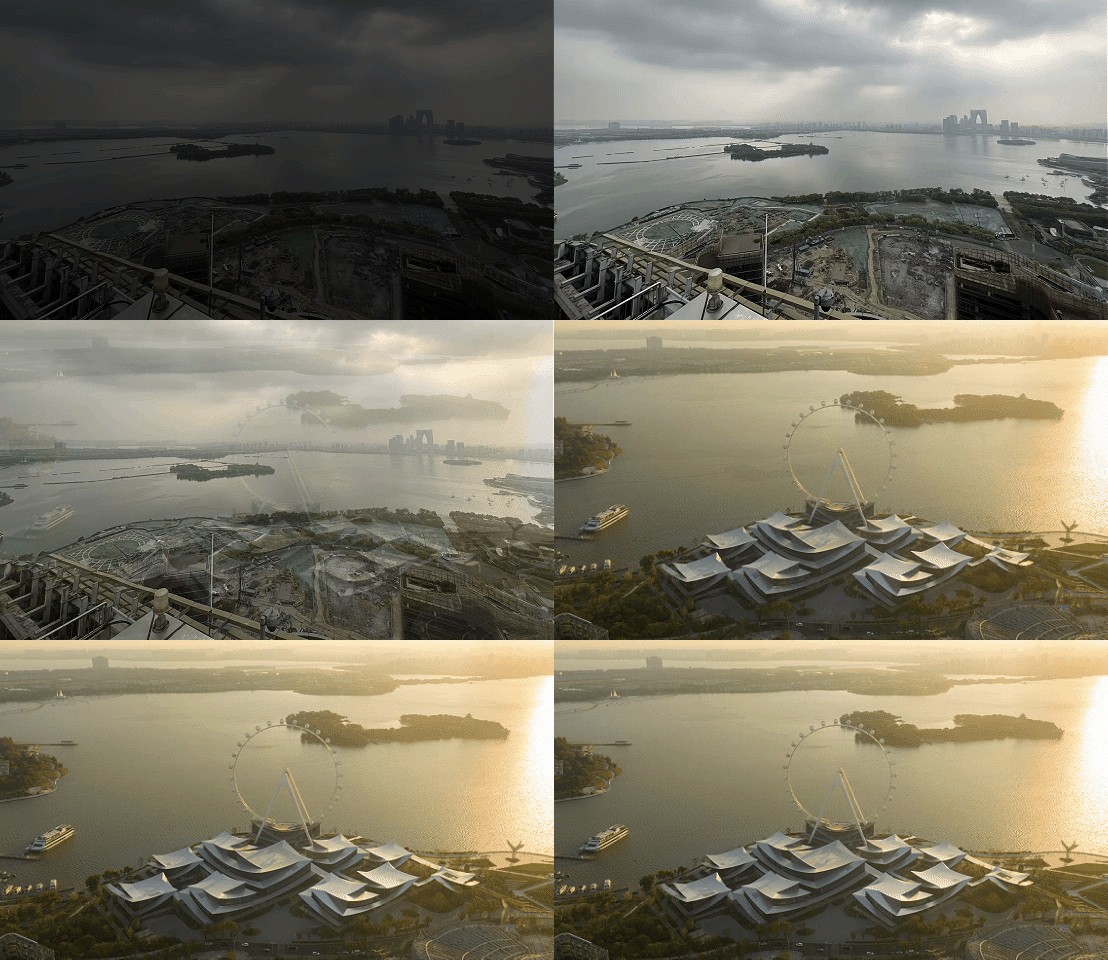
▽苏州当代美术馆呈现前后对比
项目名称:苏州当代美术馆
项目规模:60000㎡
建成时间:2025年11月
项目类型:公共景观
业主单位:苏州工业园区文体旅游局(苏州当代美术馆)、中锐集团(苏州之眼)
设计单位:上海水石景观环境设计有限公司
工作内容:景观设计
设计部门:文商旅创新研究事业一部
代建方:新建元圆融发展
项目总顾问:BIG建筑事务所
建筑施工图及幕墙单位:中衡设计集团股份有限公司、Front
施工单位:苏州二建建筑集团有限公司
照片摄影:ARCH-ZOOM琢墨、林绿文化
Project Name: Suzhou Museum of Contemporary Art
Area: 60000 m²
Completion Time: November 2025
Project Type: Public Landscape
Clients: Suzhou Industrial Park Bureau of Culture, Sports and Tourism (Suzhou Museum of Contemporary Art), Chiway Group (Suzhou Eye)
Landscape Design Firm:: Shanghai Shuishi Landscape Design Co.,Ltd.
Design Team: The First Business Unit of Cultural, Commercial and Tourism Innovation Research
Project Developer: SIP New Yuyuan Development Co., Ltd.
General Project Consultant: BIG (Bjarke Ingels Group)
Architectural Construction Drawing & Curtain Wall Design: ARTS GROUP CO.,LTD., Front
Constructor: Suzhou Erjian Construction Group Co., Ltd.
Photography: ARCH-ZOOM, Linlü Culture
“ 用当代的景观语言创造建筑与自然的无界融合,赋予当下城市生活一种全新的自然文化体验。”
审稿编辑:Maggie
更多 Read more about:水石设计 SHUISHI


0 Comments