

本文由 SLA Architects 授权mooool发表,欢迎转发,禁止以mooool编辑版本转载。
Thank SLA Architects for authorizing the publication of the project on mooool, Text description provided by SLA Architects.
SLA:Grønningen-Bispeparken位于位于丹麦哥本哈根的Nordvest社区,是目前建成的最新、最前沿的气候适应性公园。通过从根本上遵循自然,SLA将城市的一个2万平方米的贫瘠草坪改造成了一个新的郁郁葱葱、具有气候韧性、充满乐趣、生物多样性和自然气息的城市自然公园。它的成功成为了城市发展的转型式范。
SLA:Copenhagen’s latest and most radical climate park, Grønningen-Bispeparken, transforms a barren grass area into a cohesive 20,000 m2 lush, playful, biodiverse, and art-filled urban nature park for all. Grønningen-Bispeparken is not a romantic promenade park but a transformative paradigm shift in urban development, where form follows nature and architecture’s foremost task is to create spaces for life – all life.
▽改造前的社区公园,以平整的草坪和修剪整齐的灌木为主,改造后的社区公园,创造了一个更加多样化、生物多样性和有弹性的种植组合,更具包容性,是适合所有生命的全年绿洲


该区域为20世纪50年代建造的公共住宅区,位于哥本哈根西北部社区。Grønningen-Bispeparken的原有绿地已面目全非,沦为安全隐患重重的废弃区域,既无活动空间,亦无儿童与居民可使用的游乐设施。且原有草坪无法有效管理或蓄滞雨水——导致暴雨期间形成名副其实的“雨水高速通道”,同时植物种类单一、野生动物与生物多样性匮乏。
设计工作室SLA在汲取传奇丹麦景观建筑师C.Th. Sørensen(1893-1979)所规划的原绿地价值与理念的基础上,结合现代城市的需求与愿景进行了革新。改造任务旨在将破败、不安全且荒芜的草坪区域转变为新型气候公园,既可抵御暴雨和洪水灾害,又能为社区及居民增添社交、自然与文化价值。
IN 2020, following a competitive tender, the City of Copenhagen appointed Danish nature-based design studio SLA to transform the 20,000 m2 outdoor areas of Grønningen-Bispeparken – a 1950s social housing estate. Located in Copenhagen’s Nordvest neighbourhood, the task was to transform the housing estate’s outdoor areas from derelict, unsafe, and barren grass lawns into a new climate park that would secure the area against thunderstorms and flooding while also adding social, natural, and cultural values to the neighbourhood and its residents.
The new park design took the values and ideals of the original green areas, designed by legendary Danish landscape architect C.Th. Sørensen (1893-1979), and updated them to encompass the needs and aspirations of a modern city. Utterly transformed today, the original green areas had fallen into unsafe disrepair with no activities, usages, or play areas for the local kids and residents. The existing grass lawn was unable to manage or contain rainwater – resulting in veritable ‘rainwater motorways’ during thunderstorms – while also being very low on plant variation, wildlife, and biodiversity.


将气候生物洼地与有趣的“社交洼地”相结合
Combining climate bioswales and playful ‘social swales’
为应对这些挑战,SLA 将公园设计为哥本哈根迄今为止最激进的基于自然的气候适应项目。
设计通过让公园的形式遵循自然的进程,SLA在整个倾斜的绿地中创建了一系列相互连接的18个生态洼地,可以有效的收集、容纳和渗透公园及相邻庭院、街道上超过3000m³的雨水。
To address these challenges, SLA designed Grønningen-Bispeparken to be Copenhagen’s most radical nature-based climate adaptation project to date.
By letting the form of the park follow the processes of nature, SLA created an interconnected series of 18 bioswales throughout the sloping green areas that can collect, contain, and infiltrate more than 3,000 m3 of rainwater falling in the park and the adjacent courtyards and streets.
▽设计在倾斜的绿地上创建了18个相互连接的生态沟,可以有效收集、容纳、渗透公园及相邻庭院、街道上超过3000m³的雨水
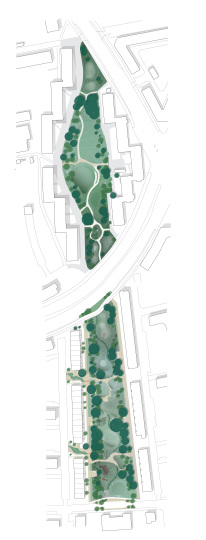
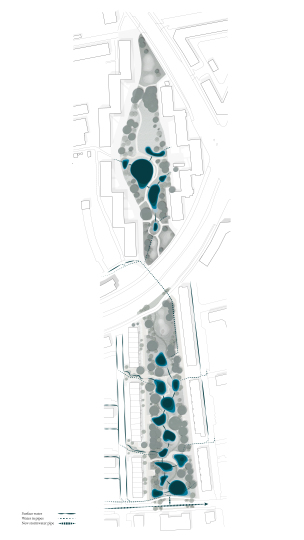
▽改造后的场地更具韧性


该公园于2024年8月31日落成。仅仅五天后,一场大雷雨袭击了哥本哈根,淹没了几条主要公路和基础设施。但在Grønningen-Bispeparken,大雨只会让新公园变得更加美丽、感性和郁郁葱葱,而周围的房屋和基础设施仍然安全干燥。
所有这些都证明,在Grønningen-Bispeparken,雨水并不被视为一种威胁,而是一种值得庆祝的自然资源。
The park was inaugurated on August 31, 2024. Only five days later, a major thunderstorm hit Copenhagen flooding several major highways and infrastructures. But in Grønningen- Bispeparken, the heavy rain only made the new park more beautiful, sensuous, and lush – while the surrounding houses and infrastructures remained safe and dry.
All proving that in Grønningen-Bispeparken, rain is not seen as a threat – but as a natural resource to be celebrated.
▽雨水不被视为威胁,而是一种值得庆祝的自然资源© SLA / Marie Damsgaard
四季皆宜的万物绿洲
A year-round oasis for all life
同时为社区及其居民增添社会、自然和文化价值。该公园根据其气候和社会功能设计了五种主要的自然类型:潮湿的生物绿洲,自然和野生动物拥有通行权;树干之间的小型干燥群落,用于亲密玩耍和放松;公共草坪用于体育、农贸市场、社区晚宴和公共活动;为居民提供非正式社交和休憩场所;碉堡山,将旧公园冷战时期的地下掩体改造成灵活的社交场所。
该公园的设计得到了当地社区的广泛参与。SLA的内部社会设计团队由人类学家和社会学家组成,与艺术家Kerstin Bergendal一起与该地区的许多居民和利益相关者合作,以确保公园对所有人都有意义。其中最重要的是艺术家Kerstin Bergendal和景观工作室Efterland的木制艺术品。这些艺术品的灵感来自20世纪70年代的丹麦自然游乐场,与公园的自然结构无缝融合,为儿童和成年人提供了在木制艺术元素上玩耍、锻炼和社交的各种机会。
通过将气候挑战与社会活动相结合,生态谷兼顾的“社会洼地”,为公园提供了一系列有趣、自然丰富、安全的社区和聚会场所。
The park features five main nature typologies designed according to their climate and social functions: the wet Bio Oases where nature and wildlife have the right of way; the small, dry biotopes Between the Trunks for intimate play and relaxation; the larger, dry Common Lawns for sports, farmer’s markets, community dinners, and events; the small, urban Pocket Squares for informal stay and socializing between the buildings; and The Bunker Hills that transform the old park’s Cold War underground bunkers into flexible social places – from catching the evening sun in the summer to sledding and skiing in the winter.
Alongside the design of the new park, the National Arts Council of Denmark commissioned the artist Kerstin Bergendal to a four-year experimental art intervention. Her project, ‘Concerning A Meadow’, unfolded in a glitch between spatial planning, citizens’ engagement, and a new mandate for public art. As such, it offered the city’s planners, SLA’s internal Social Design Team, and local residents a parallel process for the unplanned and informal knowledge exchange regarding the park. Kerstin Bergendal also added a series of wooden art structures to the park, elaborated in collaboration with the small landscape studio Efterland. The art structures are seamlessly integrated into the park’s natural fabric, giving children as well as adults varied opportunities for play, exercise, and socializing on the wooden art elements.
By combining climate challenges with social and cultural opportunities, the bioswales double as ‘social swales’ providing the park with a host of playful, nature-rich, and safe meeting places for community and togetherness.


一条蜿蜒的砾石和黄色瓷砖小径将公园的不同区域和类型编织在一起,旨在吸引人们进入公园,近距离体验城市自然设计。
这条小路的形式也从根本上遵循了自然,围绕着公园的不同类型,有不同的宽度和可渗透的表面——有些地方甚至“溶解”成纯粹的自然,只有通过割草和小照明护柱才能看到这条小路。
现有的柏油路被拆除,取而代之的是与公园周围环境相对应的温暖材料:口袋广场、家具和道路都是黄色瓷砖制成的,灵感来自周围的建筑和格伦特维格教堂。其他材料已从哥本哈根市的剩余材料中回收和升级,以尽可能降低该项目的碳足迹。
为了让公园成为当地居民全年都喜爱的社区资产,设计新增了 23 种不同树种的 149 棵树以及超过 400 万颗精心调配的种子。所有新栽种的树木和植物均为本地物种,以保护和丰富当地的生物多样性。
新的种植补充了公园内保存下来的具有历史意义的刺梨树,形成了更加多样、生物多样性更丰富且更具韧性的植物组合。
通过一项动态维护计划,公园将在“野趣”与“有序”之间取得平衡,为人类以及植物和野生动物创造最佳的社会和生物生存条件。
A meandering path of gravel and yellow tile (a nod to the iconic neighbouring Grundtvig’s Church) knits together the park’s different areas and typologies and is designed to draw people out into the park to experience the city nature design up close.
The path’s form also radically follows nature, weaving around the park typologies with varying widths and permeable surfaces – some places even ‘dissolving’ into pure nature with the path only visible through cut grasses and small lighting bollards.
The existing asphalt paths are removed and replaced with warmer materials that correspond to the park’s surroundings: Pocket squares, furniture, and path are made of yellow tiles, inspired by the surrounding buildings as well as Grundtvig’s Church. Other materials have been recycled and upcycled from the City of Copenhagen’s surplus materials to lower the project’s carbon footprint as much as possible.
Designed to be an inviting, all-year-round neighbourhood asset for the local residents, Grønningen-Bispeparken adds 149 trees of 23 different species and more than 4 million planting seeds of specially crafted seed mixtures. All new trees and plants are native species to preserve and enhance the local biodiversity.
The new planting supplements the park’s preserved historic buckthorn trees, creating a more varied, biodiverse, and resilient planting composition.
Through a dynamic maintenance plan, the park will be balanced between the ‘wild’ and the ‘orderly’ to create optimal social and biological living conditions for humans as well as plants and wildlife.
▽一条蜿蜒而消融的小径


▽街区雨水收集沟


Name: Grønningen-Bispeparken
Location: Copenhagen
Area: 20,000 m2
Client: The City of Copenhagen
Architect: SLA
Engineer: Niras
Art project: Kerstin Bergendal and Efterland
Contractor: Ebbe Dalsgaard A/S
Inauguration: August 31, 2024
“公园通过从根本上遵循自然,在“野生”和“有序”之间保持平衡,为人类以及植物和野生动物创造最佳的社会和生物生活条件。”
审稿编辑:junjun
更多 Read more about: SLA Architects


0 Comments