


本文由 boll Design Studio 授权mooool发表,欢迎转发,禁止以mooool编辑版本转载。
Thanks boll Design Studio for authorizing the publication of the project on mooool, Text description provided by boll Design Studio.
boll是园:地图上,丝带状的颍河穿过圆润如镜的白沙湖。坐落于此的白沙水库建于上世纪50年代,随季节涨落蓄放,至今仍承担着防洪、灌溉、供水的责任。逍遥岭与二龙山构成环湖山体屏障,部分水岸岩壁上仍见石窟佛龛遗迹,令山色带着些许神秘。由于水库地处几大城乡边缘交汇点,又是候鸟迁徙的东亚-澳大利西亚路线短暂停留点,人们需与自然达成微妙的共存。
boll Design Studio:The ribbon-like Ying River flows past the enormous, mirror-like Baisha Lake. In the 1950s, the Baisha Reservoir was built, and since then, this complex has fulfilled its duties of flood control, irrigation, and water supply to the present day. The Xiaoyao Ridge and Erl Mountain form a protective ring of hills around the lake, with still visible remnants of ancient Buddhist grottoes half submerged in the water, contributing a touch of mystery to the landscape. Located on the East Asian-Australasian Flyway for migratory birds, the reservoir also serves as temporary stopover for various species, necessitating a subtle coexistence between humanity and nature.
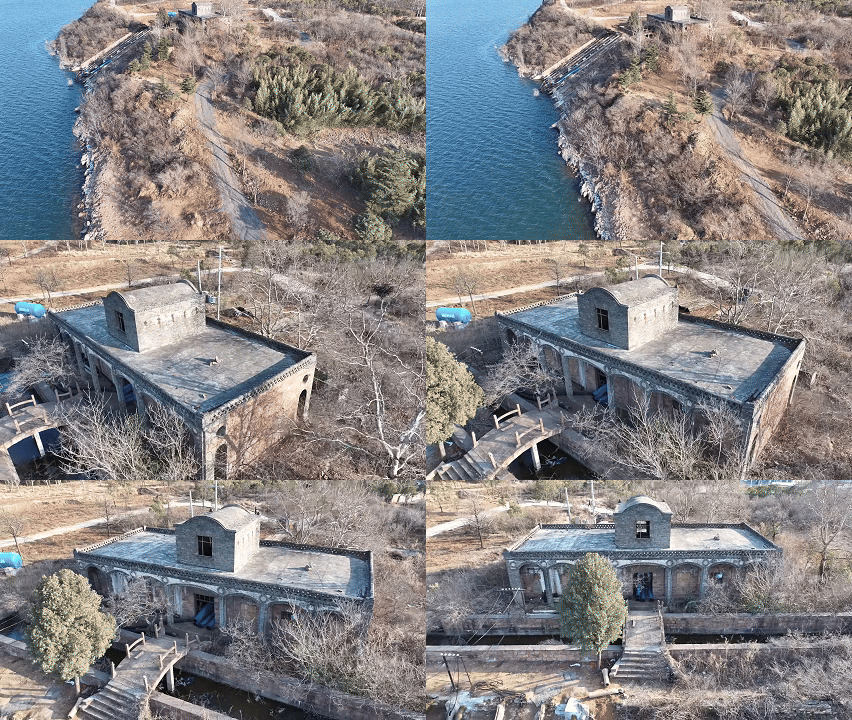
▽改造前,2024年年初项目场地鸟瞰视角。
Aerial view of the project site before renovation, early 2024.

.gif)

▽改造后,2025年末项目场地鸟瞰,时有积雪。
Aerial view of the project site after renovation, late 2025, occasionally with snow.


奇景:行至水流处
The Place: Journey to the Waterfront
项目位于白沙水库西侧,占地近90亩,比邻自然山水,又与城市保持着一段适当距离,因此期望为周边民众提供一处亲近自然,了解当地水文风貌的景观体验。场地并非一张白纸,印刻着断裂错开的年代记忆与开发痕迹,串联起设计的叙事线索。
The project is located on the west side of Baisha Reservoir, spanning around 60000 sqm(14 acres). Although the site features outstanding natural scenery and maintains a decent distance from urbanization, it is not a tabula rasa. It holds the fragmented memories of different eras, with traces of tourism development, religion practice, irrigation systems and farming—all connected to the people and the landscape. The design aims to provide a natural escape and a bridge to understand local geography for residents from several large towns nearby.
▽河南省禹州市花石镇白沙北村白沙水库西侧及场地上残留的历史印记。
West side of Baisha Reservoir, Huashi Town, Yuzhou, Henan Province.


上世纪中叶苏联援建时留下的提灌站、明渠、等宽堰、量水建筑物依然矗立;未建成庙宇的地块上残留有地基、立柱,红砖灰瓦的庙房在侧;50年代水库建设配套修建的石桥上,工匠凿刻的望柱头形态生动,但一切都随时间变得摇摇欲坠。
Structures from the 1950s Soviet-aided era—the pumping station, water channels, weirs, and measuring flumes—still stand. On a plot intended for a temple that was never completed, foundations and columns remain, with abandoned traditional buildings nearby. On a stone bridge hand-carved by builders during the reservoir’s construction in the 1950s, the ornamental pillar tops are vividly shaped, yet everything has become precarious over time.
▽设计尽量利用场地现有高差,减少土方工程,控制动线塑造环形剧场,抬高临河扶手墙保障安全同时净化视线。
The design utilizes existing site elevations as much as possible, minimizing earthwork, placing piers at lower ground, shaping amphitheater and terrace fields on slops, and raising retaining walls in higher cliffs for both security and enhanced views of the lake.


▽通过渐高的甬道围墙,望见的巨石如一面石鼓,提醒抵达观景长廊。
Through a gradually descending path, one arrives at the massive boulder resembling a drum, marking the entry to the open corridor.


▽对现场地形重新进行调整和梳理,对当地石材垒砌形式的探索及使用。
The existing topography was carefully adjusted, paths created or reorganized, and all features shaped using local stones in different forms and dimensions according to themes and land conditions.


▽守庙的屋子、提灌站的初始现场有着庞杂的生活痕迹,电站、电线、水泵、农田苗圃等等,以及几乎要将建筑吞没的植物。
The temple watchman house and the original site of the pumping station bore complex traces of life—wastes, power poles, wires, pumps, etc.—and vegetation that nearly overwhelmed the structures.


大片半荒废的原始场地亟待整理,同时存在的灌木林、过往开发及农耕痕迹,野性与秩序并存。设计优先利用场地原有地形与植被条件,采取局部改造与规划而非整体重建,使在地建筑与自然景观融合并能从施工干扰后快速恢复状态。确认调性及各区功能后,通过装置或建筑提示引导、规划路径上的材质与尺度变化,隐形的交互消解了压迫感,让进入的人们在微妙暗示中,自由探索场地里的节点。
Vast expanses of semi-abandoned, partially modified terrain awaited organization, coexisting with living and producing traces, embodying both wilderness and order. The design is understated, emphasizing the utilization of the site’s original landform and vegetation layers so as to preserving the land’s inherent wildness. It adopts a strategy of editing rather than reconstruction, allowing the remaining structures to blend in with the landscape.
The design employs key structures as visual focal points, various types of paths, and contrasting local materials as major elements. Visitors would explore freely through subtle visual or geographical clues rather than following fixed guides or routes.
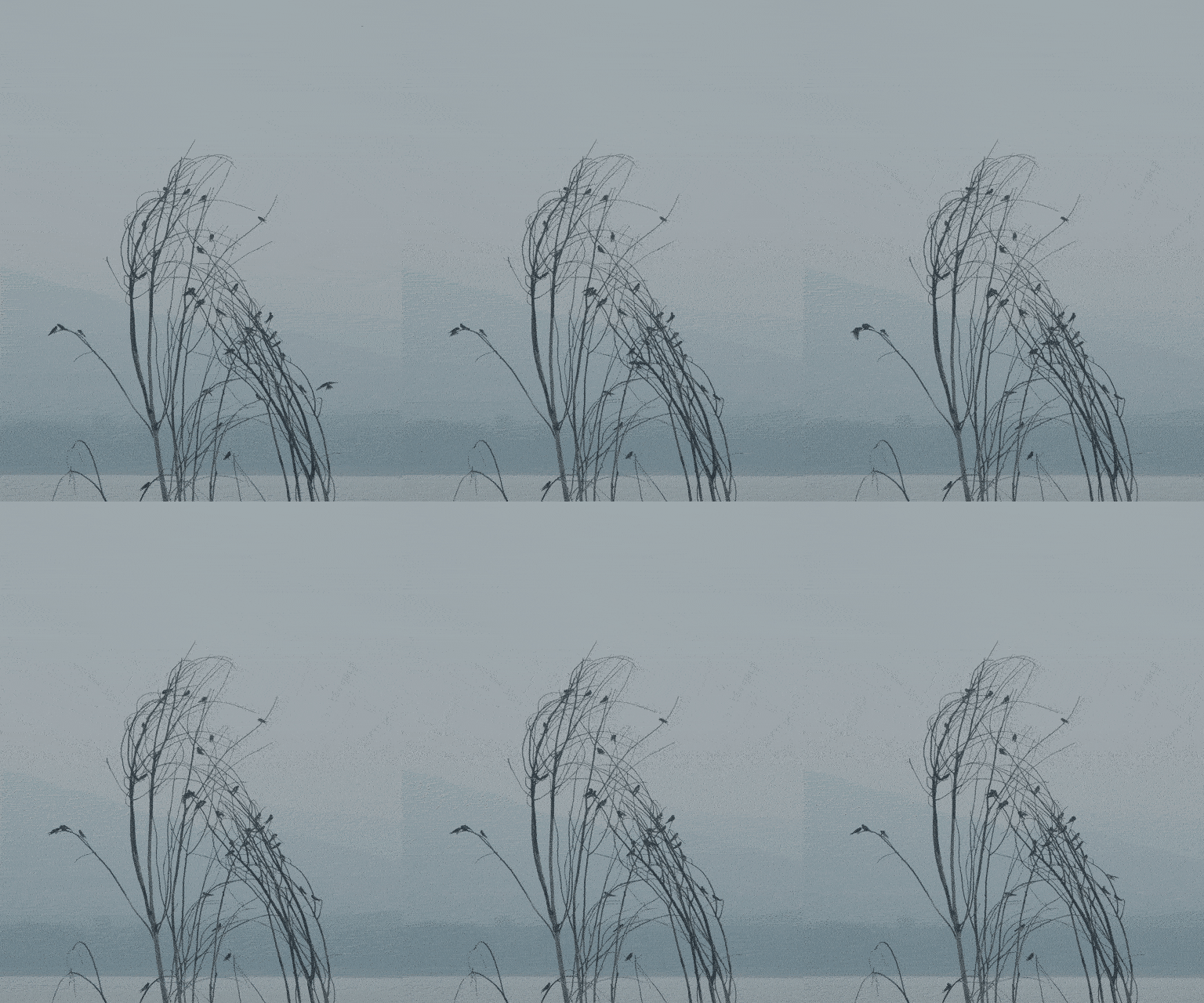
▽湖中水位升降,最低处露出连山石,最高处浸没柳树半身。附近的杨树,也在涨落反复中渐渐发白枯萎,成为奇景。
The water level fluctuates, exposing the bedrock at its lowest point and submerging the trunks of willows halfway at its highest. The nearby poplar trees, repeatedly affected by these fluctuations, gradually bleached and wither, transforming into an organic installation within the scenery.


视线:改变人与水的关系
The Perspective: Defining the Composition between Man and Water
入口采用编织天棚结构,兼具引导限流与遮阳功能,解决邻近运煤铁路高架的视觉干扰问题,同时完成空间过渡,驱车穿过斑驳阴影便进入另一个世界,抵达由梯田改造的停车场及入口,正式进入场地。作为初始的缓冲空间,根据地形梳理了区位流线同时加固不稳定地层,湖水近在咫尺,远眺能看到沿岸多样化的处理方式,等待徐徐抵达。
The entrance features a tunnel structure that serves both restrictive and shading functions. It addresses visual interference from a nearby coal transport railway while facilitating a spatial transition. Driving through the dappled shadows leads to a parking lot and entrance that has been transformed from terraced fields, marking the beginning of the journey. As an initial buffer space, areas have been delineated according to the original topography.
▽后续随着游览的深入,视线与水面的关系不断发生着改变。
The relationship between the line of sight and the lake continuously changes as the tour progresses.

.jpg?x-oss-process=style%2Ffull)
略过深入湖中的浮岛和亲水平台,一处环形空间突然显现。设计师依据原有地形断层结构回溯了古典时期的半圆形剧场形式,在此构建起一个面山临湖的阶梯式活动观演空间。
Passing by a floating ring-shaped deck and pier, one reaches a circular gathering space, easily recognized as a modern version of the ancient amphitheater. The design integrates curved stage and viewing seats that are carefully calculated and arranged, with views of the lake and mountains serving as the background.
▽场地本身有着不规则的凹陷,整理土方后,使用当地的砂岩完成挡墙与阶梯。两块巨石朝向湖水矗立,收紧视角再打开,穿过后就是壮观、一览无余的景色,和断崖。
The site itself features an irregular depression. After the earthwork was organized, local sandstone was used to construct the retaining walls, pavings and steps. Two massive stones, placed vertically, frame the lake view before diverging again. Passing through them reveals a spectacular, unobstructed vista and a cliff.


为减少不必要的土方开挖,现场所设计的场所,多为应势而就,低处设码头;陡坎设阶梯剧场或梯田; 唯独在临水地势较高处进一步抬升墙体并加固了河堤。如此增加安全性同时隔绝繁杂的历史开发残留,将视线转化为眺望纯粹水面。
To avoid unnecessary earthwork, most of the site’s design follow the existing contours. Some stone walls on higher cliffs were raised to further elevate sightlines while reinforcing the embankment. This isolates complex structures and disturbances from past developments, purifying the view to reveal nothing but water.
▽从甬道进入主动线,两边是逐渐抬高的石墙,仪式感渐强。再遇一块巨石,侧身便是可以坐下看湖面、可以遮阳挡雨的景观长廊。
Entering the passage, one is flanked by gradually rising stone walls that create a strong sense of focus. Upon encountering a massive boulder, a linear open gallery is revealed, allowing one to sit, view the lake, and seek shelter from the sun and rain.


水岸沿线:亲水近天光
The Waterfront: From Shore to Sky
可达性和可持续性也是设计的重要部分,在对自然环境影响较小的前提下,设计师根据场地现状和潮汐,对沿岸沿线加减处理,每段沿岸都提供了不同的互动、视角、场景和故事。
Accessibility and visual rhythm were also crucial aspects of the design. With minimal earthwork, the design addressed sections of the shoreline according to ground conditions and water level fluctuations (tides). Each waterfront segment provides a distinct perspective, scale, and way of interaction.
▽原本的断崖下曾是煤渣铺路,如今修补填运了河滩卵石。部分区域利用场地高差,倚坡建步道平台,乱石为过渡基础或亲水台阶;建筑周边金属为架,跳过地形修整,亦保证地被植物顺利生长,支撑起一处镂空停留观景平台。
Along the original coastline, some paths were covered with cinders as paving. Many pebbles were then used to replace the cinders. In certain areas, taking advantage of the site’s constant elevation changes, walkways and platforms were built along slopes; Larger rocks were relocated to serve as transitional foundations and steps; elevated mesh platforms were employed near major buildings to create terraces, water channel coverage, and viewpoints for visitors.

▽自然地形,水的潮汐,石头的基础构建出断崖状态、斜坡、陡坡。天然的曲线变成弧形,其间是半野生半编辑的植物群落。地形向着庙宇的方向渐渐抬高。
Natural topography, water level variations, and stone foundations give rise to cliff-like formations, slopes, and steep banks. Natural curves transform into arcs, interspersed with meadow-like perennial plantings. The terrain gradually ascends towards the temple.

.jpg?x-oss-process=style%2Ffull)

沿着湖岸继续探索,走过山坡与石阶,抵达一处当地寺庙旧址。这片土地很早前便由人们建造了地基,但因种种原因未能落成。地基中央的土地被改造成种植池,周围辅以粉色水洗石为地面硬化。庙前坡上的植物通过籽播与点种制造草甸般机理,与当地风景融为一体,透露出无意识的美感。
Traversing slopes and stone steps along the shore, one arrives at the site of a local temple. Long ago, people laid foundations here, but construction halted for various reasons. The central area of the foundation has been transformed into planting beds framed by six concrete columns, adorned with washed terrazzo. The plants on the slope in front of the temple remain semi-wild, dotted with selected perennials exhibiting similar growth habits, blending into the scenery and revealing an unconscious beauty.
▽当地人仍承认并敬畏此地,定期前来祭拜。踏入这片没有神佛雕像、没有穹顶和围墙的庙宇,没有宗教符号,人与自然对视。
Locals still acknowledge this place, visiting regularly to pay their respects. Stepping into this temple, which lacks statues of deities, domes, or halls, and devoid of religious symbols, one confronts nature directly.

▽沿着水岸线行走,尽头是一处秋千,植物与水位随季节变化剧烈。向岸上望去,坡道上是木桩矩阵,中心的多条游园动线也汇聚于此。
Walking along the waterfront, one reaches a swing near the end of the path, where the seasonal changes of nature are dramatic. Next, a ramp leads to a matrix of wooden stakes that mirrors the temple columns, where multiple paths converge.


游园动线:多种试探
The Paths: Random Exploration
经过环形剧场,如若没有进入观景长廊,可以选择在宽阔草坪撒野奔跑玩耍,后续遇见竹阵、围炉、梯田阶梯、林区,或是直接穿过林荫道,抵达木桩矩阵。部分区域可达,亲近友好,部分灌木丛生,未经修饰难以进入,留有未知野性。这些美丽的事物具有普适性,能为人们所接受,但又与现实世界保持一定距离,带来若即若离的微妙感受。
Next to the amphitheater, if one notices a shortcut via steps between boulders halfway behind the corridor, they will reach a vast lawn and then woodland. If one continues along the shelter until its end, they will encounter bamboo groves, the temple ruins, a fire pit by the cliff, and terraced fields.
All paths then converge at a stake matrix on a slope, standing against the sky. Some paths are easily accessible and inviting, while others may be secluded or hidden within nature’s mazes.
Altogether, these elements and encounters create a subtle ambiance of being both connected and detached.
▽从草坪上能看见廊道漂浮的坡顶,远离水岸,迈向另一种尝试,持续向内探索,行径中有时能隐约望见湖面。
From the lawn, one can see the floating roof of the long corridor, mostly hidden due to the elevation. Escaping from the waterfront leads to another experience of delving. Along the way, glimpses of the lake can sometimes be faintly visible through trees, fences, or buildings.
.jpg?x-oss-process=style%2Ffull)
▽三组竹林路径旋转似绵延不绝,空间收放回转,在有限中体验无限。
Three sets of bamboo groves twist and turn, seemingly endless, presenting an approximation of infinite space.


▽林荫下延绵交错的路径,吸引漫步的人们深入到阴翳、光影斑驳之中。
Under the forest canopy, multiple paths turn or cross, enticing strollers to venture further into the shade.


▽梯田种植着不同的农作物,如油菜花、小麦,小米等。随风起伏的枝叶、厚重的砂岩台阶互相映衬着反复出现,呈现人工与自然的韵律。
Terraced fields are filled with seasonal crops such as rapeseed and wheat, revealing the agricultural heritage of the land.Waving crops and lines of stone walls complement each other, forming a harmonious rhythm.


▽动线再次在木桩矩阵汇集,木桩长久作为当地传统民居的主要结构组成,也在水利工程中有着自然崇拜的含义。在此又与寺庙遗迹的立柱呼应,沿此拾级而上,就到达了整个项目的高点。
Wooden stakes often represent an elementary component in traditional architecture and also embody the meanings of natural worship in water conservancy or primitive rituals. Visitors may perceive the installation at the start of their journey as a hint of orientation. Ascending the steps from here leads to the project’s highest point.


抵达:重构制高点
The Arrival: Reconstructing the Reality
项目中原本零散分布的建筑,经由景观规划打破孤僻状态,将自然环境引入室内,将建筑融入自然。提灌站的位置位于这附近最高的山头,窑洞式的室内带着时代烙印。曾经电机将水泵到建筑前的明渠等宽堰,在此刻成为水景。石桥连接着的不是水,而是视线与天空的关系。
Originally existing as isolated points, the pumping station is located on the highest nearby hilltop. It was unconsciously integrated into the landscape. Its tube-like interior bears the imprint of its era. Occasionally, motors pump water to the tank, which then pours into an open channel surrounding the building for further irrigation. The tank now serves also as a water feature besides its practical function. The stone bridge seems to connect not the gaps between the water, but rather the land and the sky.
▽建筑与周边环境构成嵌套的空间关系。
The architecture and surrounding environment.
-evg.jpg?x-oss-process=style%2Ffull)


▽石桥上的望柱头有着各种姿态,熊猫或是小麦的形态以拙稚的样貌出现。
The ornamental pillar tops on the stone bridge feature various postures; forms resembling pandas or wheat appear with a naive appearance.


这里土层极薄且下层布满卵石,设计师按此选择芒草、岩生及适应地中海气候生境的宿根与灌木为主要种植策略,以团块散布,贴合场地及植物天然气质,使长效花园成为可能,植被的色彩机理组合与四季变化营造统一又多变的氛围体验。
In the garden, the soil layer is extremely thin, and the substrate is full of pebbles. Accordingly, the planting strategy is to introduce grasses, rock-dwelling plants, and species adapted to Mediterranean climates. All these plants are clustered according to the site plan revealing their natural characteristics. The intention is to create a long-lasting, low-maintenance garden with little irrigation. Combinations of colors and textures, along with the seasonal interests of bulbs, perennials, and shrubs, create a unified yet intriguing ambiance.
▽场地植物丰富多样,汇集70多种植物,混合种植大量种球、多年生草本及常绿灌木,四季变化明显且易于打理。
The garden hosts a collection of about 70 plant species, with mixed plantings of shrubs, perennials, and bulbs, offering distinct seasonal changes and low maintenance.


▽场地植物丰富多样,汇集70多种植物,混合种植大量种球、多年生草本及常绿灌木,四季变化明显且易于打理。
The space serves as a medium that bridges the past and the present. The deeper significance of design lies here, where the imprints of this generation might organically develop on the past foundation, like lichens.


一处承载着上世纪50年代工业遗存与90年代改造痕迹的场所,在当代修整中悄然重构其在地性。设计以留白之笔,克制地介入,让不同时代的记忆形成对话,空间成为连接过去与当下的媒介。更深远的意义在于,这种设计语言将扩散至周边区域,这一代的痕迹能如地衣般自然生长于旧骨骼之上。
A site bearing industrial relics from the 1950s and signs of renovations in the 1990s has been imbued with a sense of place through subtle, contemporary refinement. The design intervenes modestly with a restrained approach, addressing not only catching features but also negatives and beyond, allowing memories from different eras to interact.

项目名称:谷堆白沙 一期 景观
项目地点:河南省禹州市花石镇白沙北村
景观设计:boll是园
公司邮箱:info@boll-lab.com
设计团队:圆正/碧莹/JUI-FU MA/李晟/张文茜/浩然
工作内容:概念设计/图纸深化/设计监理
庭园面积:约90亩
施工单位:禹州市意和园林有限公司/上海映夏园林景观工程有限公司
室内设计:cian
项目周期:2024.04-2025.05
摄影/摄像/剪辑:Thinkverse
Gudui Baisha Phase I Landscape
Project Location: Baisha Village, Huashi Town, Yuzhou City, Henan Province, China
Landscape Design: Boll Lab
Studio Email:info@boll-lab.com
Design Team:Yuan Zhen, Bi Ying, JUI-FU MA, Li Sheng, Zhang Wenqian, Hao Ran
Scope of Work: Conceptual Design, Detailed Drawing Development, Site Supervision
Area: approx. 60000 sqm(14 acres)
Construction Units: Yuzhou Yihe Landscape Co., Ltd., Shanghai Yingxia Landscape Co., Ltd.
Interior Design: Cian
Project Period: April 2024 – May 2025
Photography/Videography/Editing: Thinkverse
“ 重构山水,与自然达成微妙的共存。”
审稿编辑:junjun
更多 Read more about: boll Design Studio


0 Comments