
本文由末广建筑授权mooool发表,欢迎转发,禁止以mooool编辑版本转载。
Thanks Moguang Studio for authorizing the publication of the project on mooool, Text description provided by Moguang Studio.
末广建筑:我往高高的雪山走,只为了与你在山间的神湖相遇。—— 德钦民歌
Moguang Studio:“I walk toward the high snow mountains, only to meet you at the sacred lake among them.”— a folk song from Deqin area
▽酒店远景:建筑微微退后一步,在群山背景下形成一处被安顿的居停之所©朱雨蒙

▽顶层咖啡厅:延展的屋盖与开阔露台,共同构成面向梅里雪山的停驻界面©朱雨蒙

▽咖啡厅入口:木构秩序、几何门板与坐榻,共同营造出近似“家”的安静开场©孙海霆

▽中庭与回廊:交叠回廊与天光,将行走与停留组织为连续展开的入住经验©孙海霆

▽客房借景:雪山并未被直接推出,而是在洞口、床榻与窗边停留之间缓慢显现©朱雨蒙

01.喧嚣之中,筑心安
2022年夏季,在驻守上一个酒店项目施工现场期间,我们接到了同一品牌位于云南迪庆藏族自治州梅里雪山的酒店项目委托,负责建筑与室内的一体化设计。项目场地位于梅里雪山国家公园十三塔观景台,毗邻雾浓顶村。
01. A Place of Calm Amid Noise
In the summer of 2022, while stationed on site for another hotel project, we were commissioned by the same hospitality brand to design an integrated architecture and interior scheme for a new hotel at Kawagebo Snow Mountain, in the Diqing Tibetan Autonomous Prefecture of Yunnan. The site is located at the Thirteen Pagodas Viewing Platform in Kawagebo Snow Mountain National Park, adjacent to Wunongding Village.
▽项目视频
▽建筑在复杂现场中保持了清晰而克制的界面感©孙海霆

梅里雪山地处怒山山脉,是雍仲苯教的重要圣地,同时也是“三江并流”区域的核心地带。从高耸的雪峰与冰川,到原始森林、草甸湖泊,以及纵横其间的大河与溪流,这片区域蕴含着强烈而复杂的自然之力,长期吸引着信徒、人类学家与旅行者。
在驻场的间隙,我翻读了《雪山之书》《灵魂像风》等藏地笔记,字里行间不断显现出卡瓦格博地区对人的独特吸引力。然而,在多元文化高度交汇的当下,这片土地早已无法回避旅游开发与全球化的介入。书中所描绘的“雪山脚下,古老文明与安然生活并置”,更接近一种理想化想象,而非正在发生的现实。这一体会在随后的场地踏勘中被进一步印证:国道沿线,密集排布的客栈与酒店为争夺最佳雪山视线不断前探,景区道路愈发逼仄;街沿的小吃摊与临时工棚层层叠加,噪声与混乱持续涌入视野。对于一处度假酒店而言,这样的场地条件既难以“顺势借景”,也难以“借势起笔”。
因此,设计所要面对的,并非塑造一个关于“雪山场所”的浪漫投射,也不在于修复想象中的在地性,而是在一处已高度景区化的消费场景中,诚实回应当下:在被过度凝视的景观之中重建体验的秩序,并以克制的姿态、朴素的敬畏与温柔的留白,在人与神山之间,塑一处脚可暂歇、心可安放的所在。
Part of the Nu Mountains, Kawagebo Snow Mountain is an important sacred landscape in the Yungdrung Bön tradition and a core area within the Three Parallel Rivers region. Towering peaks and glaciers, primeval forests, alpine meadows and lakes, together with the great rivers and tributaries that cut across the terrain, give this landscape an intense and complex natural force. For generations, it has drawn pilgrims, anthropologists, and travelers alike.
During breaks on site, I read books and field notes on the Tibetan region. Again and again, they described Kawagebo as a place of magnetic spiritual and geographic presence. Yet under the conditions of contemporary tourism and globalization, this territory can no longer be understood through romantic projections alone. The image of “an ancient civilization living peacefully beneath the sacred mountain” belongs more to an idealized imagination than to the realities on the ground today. Site visits only confirmed this. Along the national highway, rows of hotels and guesthouses extend forward in competition for the best snow-mountain views. Roads have become increasingly constricted; temporary stalls, food vendors, and makeshift sheds spill into public space. Noise and visual clutter are constant. For a resort hotel, the site offered neither the possibility of effortlessly borrowing the landscape nor the chance to begin from a pristine setting.
The task, then, was not to stage another romanticized image of the mountain, nor to reconstruct an imagined authenticity. It was to respond honestly to the present condition: to re-establish an order of experience within an overexposed tourist landscape, and with restraint, humility, and deliberate reserve, to make a place where one might briefly rest, and where the mind, too, might find calm.
▽顶层灯光如同一处安静发亮的界面,回应神山脚下的短暂停留©朱雨蒙

▽咖啡厅围坐空间:无柱开间将雪山引入日常起居,使眺望、围坐与谈话在同一屋盖下并置©朱雨蒙

▽大堂火塘:取意于藏房火塘的铜质壁炉被置于公共空间核心,重新组织围坐、停驻与聚拢©孙海霆

项目可建设范围约 560平方米(长约 27 米、进深约 21 米)。场地南偏西 45°方向正对梅里雪山群峰,却需直面前方空地长期作为村集体堆料场的现实,并毗邻一处体量前探约 6 米 的在建项目;北侧则为被道路切削后的山体。
在建筑限高15米的约束下,若地上布置五层,层高必然局促;仅设四层又显浪费。基于此,设计将首层整体抬高1.8米。抬高后的地上四层分别布置接待区、客房及咖啡厅,使酒店主要功能空间获得更为纯粹的视野与更好的私密性,避免来自场地周边的直接干扰;地下部分则容纳餐厅、厨房、后勤总仓及消防设备用房。客人可由入口前院跨桥进入大堂,亦可沿石阶下行,抵达负一层餐厅。建筑边界与道路间的三角形内院,为餐厅引入自然采光与通风。
The buildable footprint was approximately 560 square meters, measuring roughly 27 meters in length and 21 meters in depth. The site faces the main peaks of Kawagebo Snow Mountain to the south-west, yet also confronts the reality of an open area in front long used by the village collective as a storage yard, as well as a neighboring construction project protruding some six meters toward the view. To the north lies a slope cut back by the road. Under a height limit of 15 meters, a five-storey building above ground would have resulted in cramped floor heights, while a four-storey scheme would have underused the allowable volume. In response, the design raises the first floor by 1.8 meters. Above ground, the four main levels accommodate the reception, guest rooms, and café, allowing the hotel’s primary spaces to enjoy clearer views, greater privacy, and less direct interference from the surroundings. The basement level contains the restaurant, kitchen, storage, and fire-control rooms. Guests may cross a bridge from the entry forecourt into the lobby, or descend by stone steps to the restaurant below. A triangular courtyard between the building edge and the road brings daylight and ventilation into the lower level.
▽酒店置身景区化开发与村庄日常并存的现实环境中©朱雨蒙

建筑以简洁而克制的立方体量回应周围的自然环境,外立面采用干挂、保留凿痕肌理的白色砂岩,呈现出朴素而沉稳的质感。四层咖啡厅屋顶在水平方向延展,南侧露台处略作收退,使下方白色实体的体量关系更加清晰而有力。客房阳台悬挂灰色遮阳布作为栏板,形成富有韵律的立面单元格。
The building takes the form of a restrained and compact volume in response to the surrounding environment. The façade is clad in dry-hung white sandstone with a deliberately retained chiseled texture, giving the building a quiet, grounded material character. The roof of the fourth-floor café extends horizontally, while the southern terrace is slightly set back, sharpening the massing relationship of the white volume below. Grey textile screens hang from the guest-room balconies as balustrades, forming a rhythmic façade grid.
▽客房阳台以布艺为栏板,回应了藏地民居悬挂布料与护墙幔的围护逻辑©朱雨蒙

02. 装饰即构造记忆的再书写
作为外来的设计者,横断山脉于我们而言是一个庞大而多维的存在——通向它的路径无数,而有限的生命却注定只能踏入其中一条,无法将其摊平、剖析。卡瓦格博地区与我们之间,横亘着宗教文化、地域环境与经验意识的巨大差异,彼此对峙,又相互凝视 —— “它超出我们的经验,成为梦想、遥望与寻觅之地。寻觅,并非为了印证我们的‘有’,而是为了确认我们的‘无’。”
基于这一认知,设计的起点并非形式的移植,而是对藏区传统居住形态与寺庙空间的持续观察,试图从中重新发现当代设计经验中所缺失的空间智慧。旅行中的身体经验也被带入设计判断之中,使我们逐渐意识到:空间的关键并不只在平面布局本身,而在于平面、竖向、结构、光线与色彩共同构成的层层递进关系。尤其在藏传佛教寺庙中,由木构、回廊与主殿共同生成的空间语法,本质上是一种由身体经验激活的结构关系:围绕核心空间展开的回廊,不仅是一条礼拜与通行的路径,更是一套将身体行走、空间递进与高窗光影结合起来的经验结构。人并非一下子进入中心,而是在回绕、停留、回望与上行的过程中,逐步感知空间的层次、秩序与精神重心。与此同时,高窗引入的顶部侧光与天光也并不将空间一次性照亮,而是让光在柱列、梁架、檐下、栏板与墙面之间不断被切分、反射与削弱,形成一种由暗到明、由低到高、由边缘至中心展开的明暗递进关系。
02. Ornament as the Rewriting of Construction Memory
As outsiders, the Mountains remain for us a vast and multi-layered world. There are countless paths into it, yet a finite life allows entry into only one at a time; it cannot be flattened, surveyed, or fully grasped. Between us and the Kawagebo region lies a profound distance—of religion, climate, territory, and lived experience. It stands before us as something beyond our own frame of reference: not a place to confirm what we already know, but one that reveals the extent of what we do not know.
From this position, the project did not begin with formal quotation. Instead, it grew out of continuous observation of Tibetan dwellings and temple spaces, in an effort to rediscover spatial intelligence that contemporary design often neglects. Bodily experience gathered through travel gradually reshaped our judgment. What matters in these spaces is not only the plan, but the layered relation between plan, section, structure, light, and color. In Tibetan Buddhist temples especially, the spatial syntax generated by timber structures, surrounding galleries, and principal halls is fundamentally activated by the body. The ambulatory around a central space is not merely a circulation path; it is an experiential structure in which movement, spatial sequence, and clerestory light are bound together. One does not enter the center all at once, but senses the space progressively—through circling, pausing, turning back, and ascending. Light, too, enters from above not to illuminate everything evenly, but to be cut, reflected, and softened by columns, beams, eaves, balustrades, and walls, producing a gradation from dark to light, from low to high, from edge to center.
▽大昭寺柱廊与建筑空间关系©末广设计

▽寺庙柱廊、庭院与光影©末广设计

▽柱廊、屋面与天窗共同组织出层层递进的光线与空间秩序©末广设计

与这种空间结构和身体经验同样重要的,还有当地寺庙与民居中悬挂于建筑构件之间的织物。它们附着在柱、墙、檐口、门窗与栏板之上,使原本由木构与砌体形成的空间骨架,进一步获得一种柔性的表情与感知层次。由此回看藏地建筑,织物的意义便不止于地方性装饰,而更接近一种基础性的构造线索。它既回应气候条件,也塑造身体感知;既承担现实功能,也参与精神象征。它们既可挡风、遮阳,也能保护木构与彩绘免受风雪侵蚀;在没有乳胶漆与壁纸的年代,织物亦是为空间引入色彩、纹样乃至宗教象征的直接载体。
Equally important are the textiles suspended between architectural elements in local houses and temples. Draped over columns, walls, eaves, windows, and balustrades, they give timber and masonry frameworks a softer register of expression and perception. In this sense, textiles in Tibetan architecture are not simply decorative. They are closer to a primary tectonic clue. They respond to climate while shaping bodily sensation; they serve practical functions while participating in symbolic and spiritual expression. They shield against wind and sun, protect timber and painted surfaces from weathering, and, in the absence of modern paint and wallpaper, introduce color, pattern, and religious meaning directly into the space.
▽寺庙与民居中悬挂于墙体内外的织物,为项目关于围护、过滤与界面层次的组织提供线索©末广设计

随着时代与加工方式的演进,一栋藏房在数代使用者的增补与修缮中,成长为木构、砌块、夯土、轻钢、织物涂饰等多材料交织的混合体系:时常旧木梁旁是轻钢结构,传统织物边是现代板材。
原有建筑的构造逻辑得以保留,新的构造在其上不断增殖、生长,呈现出一种清晰而富有张力的“构造的解构与生长”的建造美学。其中大量自发的用材选择,在个体工匠的手艺与记忆介入下,显得丰富而大胆,率性而生动。
As methods of building evolved over time, Tibetan houses became hybrid material systems formed through generations of repair and extension: timber, masonry block, rammed earth, light-gauge steel, textiles, and applied finishes interwoven in one structure. An old timber beam may stand beside a steel member; traditional woven fabric may meet a modern panel. The original tectonic logic remains, while new constructions accumulate and grow upon it. What emerges is a vivid architectural aesthetic of deconstruction and growth—a tectonic language at once clear, improvised, and full of tension. Many of the material choices appear spontaneous, yet they are informed by the hand, memory, and confidence of individual craftspeople.
▽这些建筑并非凝固的类型原型,而是在长期使用与不断修补中,发展出一种因地制宜的民间建造智慧:不同材料、构造与时代痕迹彼此叠加,共同构成开放 而务实的建造体系©末广设计


在这样的语境里,装饰是对构造记忆的反复书写,并非建造后简单的图案附加。拆解在地构造、通过跨材质拟仿并组织空间与细部,让装饰顺着构造和材料的逻辑自然生长,既塑造氛围,也让每一户藏房在结构语法上生长出专属自己的版本。
即便未来用金属模拟布料、用混凝土转译木作,“虽材料更替,但形式记忆犹在”,这与德国建筑师Gottfried Semper 提出的 petrified carpentry(“石化的木作”)不谋而合,成为本项目构造设计的起点。
Within such a context, ornament is not a superficial graphic layer applied after construction. It is the repeated inscription of construction memory. By unpacking local tectonic logic, working across materials through translation and analogy, and organizing space and detail accordingly, ornament can grow naturally out of the logic of material and assembly. It becomes atmospheric, but also structural in origin. Each Tibetan house, while sharing a common grammar, acquires its own particular version through this process. Even when metal comes to simulate fabric, or concrete begins to translate timber, material substitutions do not erase formal memory. In this sense, the project resonates with Gottfried Semper’s notion of “petrified carpentry,” which became an important starting point for our tectonic thinking.
▽阳台围栏提炼自护墙布幔的包边、缝合与绷拉方式,将织物的柔性秩序转化为立面语言©朱雨蒙

03. 中庭与回廊:天光塑造“层次之白”
德钦昼夜温差大,高海拔环境中的居住者抵御强紫外线的同时,也在索取阳光带来的暖意,人与光的关系亲近并敬畏。藏房中的阳光房、黑帐篷顶的小天窗,正是对这种矛盾需求的直接回应。
03. Atrium and Gallery: Layered Whiteness Shaped by Daylight
Deqin area experiences strong diurnal temperature shifts. At high altitude, people seek protection from intense ultraviolet radiation while also relying on solar warmth. The relationship between light and inhabitation is therefore both intimate and cautious. Sunrooms in Tibetan houses and small roof openings in black tents are direct responses to this paradox.
▽理塘红龙村黑帐篷©刘达

▽理塘黑帐篷中关于撑起、围合与引光的逻辑,被重新组织为中庭屋盖的木构与采光系统©末广设计

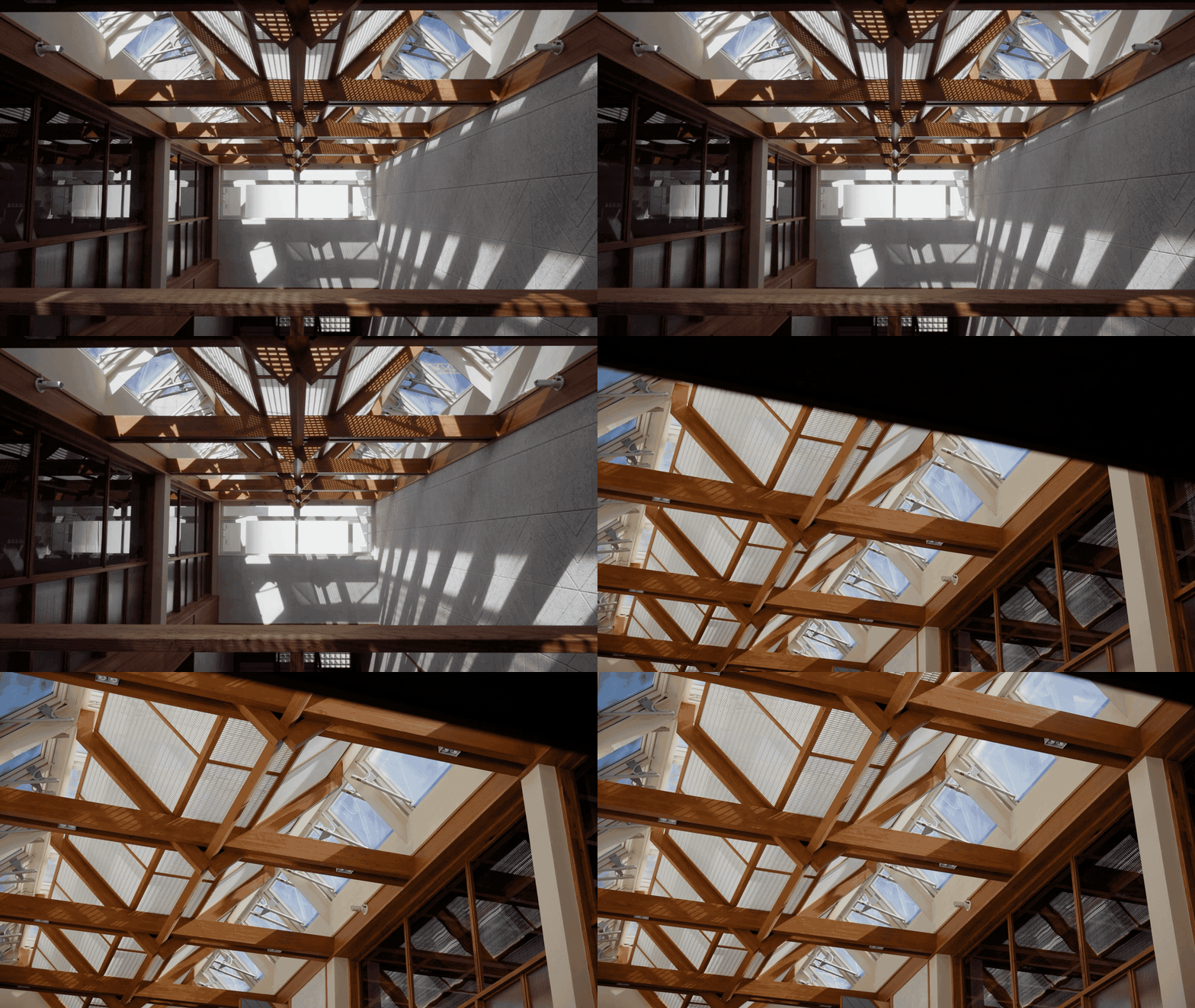
▽木梁延续了屋盖的结构逻辑,正梯形天窗与倒梯形梁架共同围合出一处“光的腔体”©孙海霆

▽天光自上部漫入,并与玻璃砖墙过滤后的侧向散射光叠合,使一层休息区呈现出均匀、安静而温润的光感©孙海

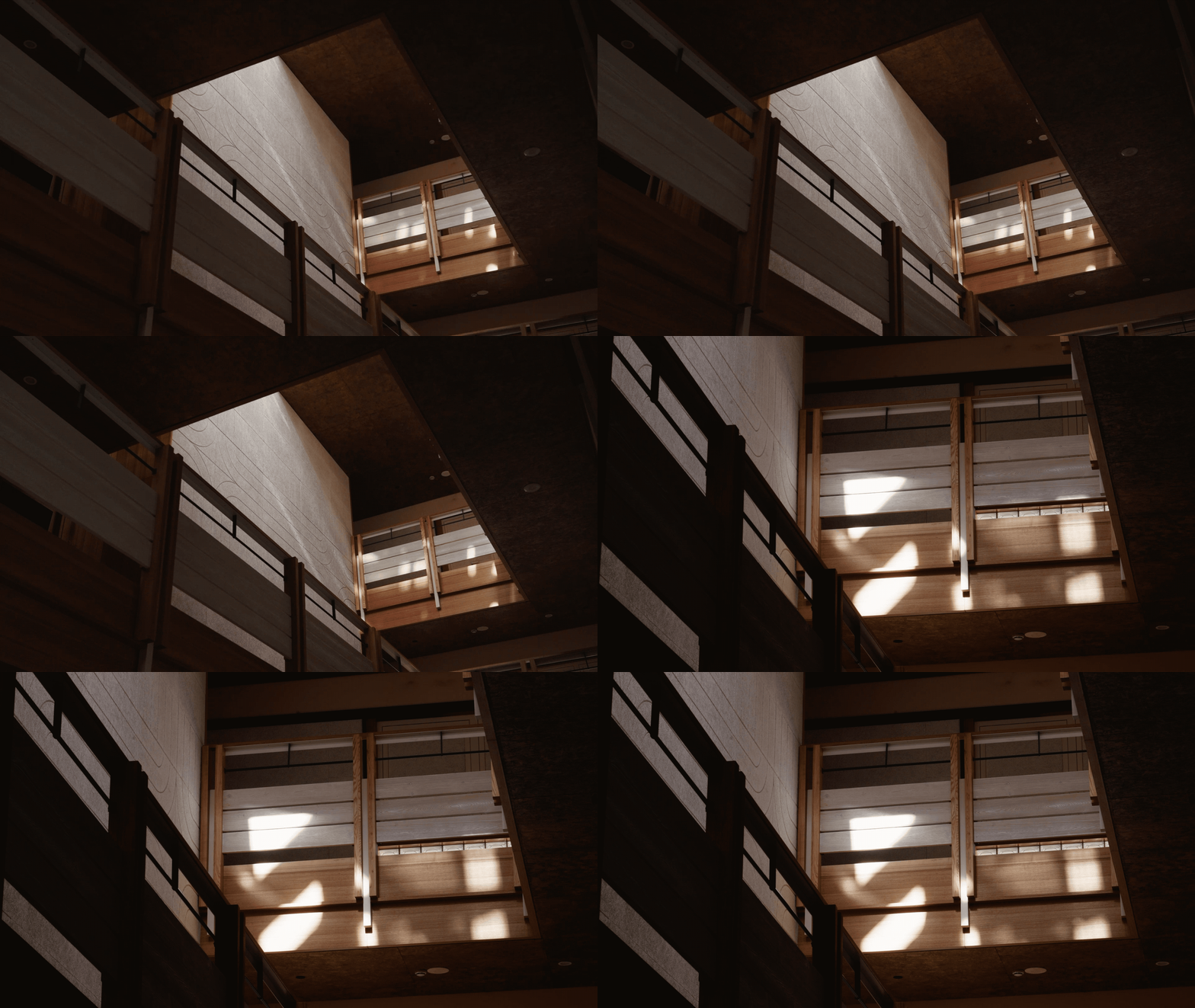
▽交叠展开的回廊缓和了通高空间的压迫感,也让中庭从经过之处变成一处值得停留的内向风景©孙海霆

▽从中庭回望酒店接待处©孙海霆
延续这一逻辑,设计从剖面入手,在中庭展开:以向上生长的空间形态,让中庭成为整座建筑白天蓄能、夜晚缓缓释出热量的温室。考虑到四层通高的中庭容易显得过于高耸,我们在二、三层设置了交叠展开的走廊,将一层大堂、客房区与四层咖啡厅串联起来,形成一条自下而上层层展开的公共垂直动线。于是,客房区的走廊不再只是交通空间,而成为将“住客经过”转化为“住客感受空间”的媒介。
Extending this logic, the project develops the atrium from the section outward. Rising vertically through the building, it acts as a greenhouse-like core, storing warmth during the day and gradually releasing it at night. Because a full four-storey void could easily have felt too tall and abrupt, overlapping galleries were inserted on the second and third floors, linking the lobby, guest-room levels, and fourth-floor café into a vertical public route that unfolds gradually. In this way, the guest-room corridors are no longer merely functional passageways; they become mediating spaces that transform circulation into spatial experience.
▽光线沿中庭自上而下缓慢晕开,人的视线与步伐也在转折与上下之间不断被引导©朱雨蒙


▽光影变化 Gif@©末广设计
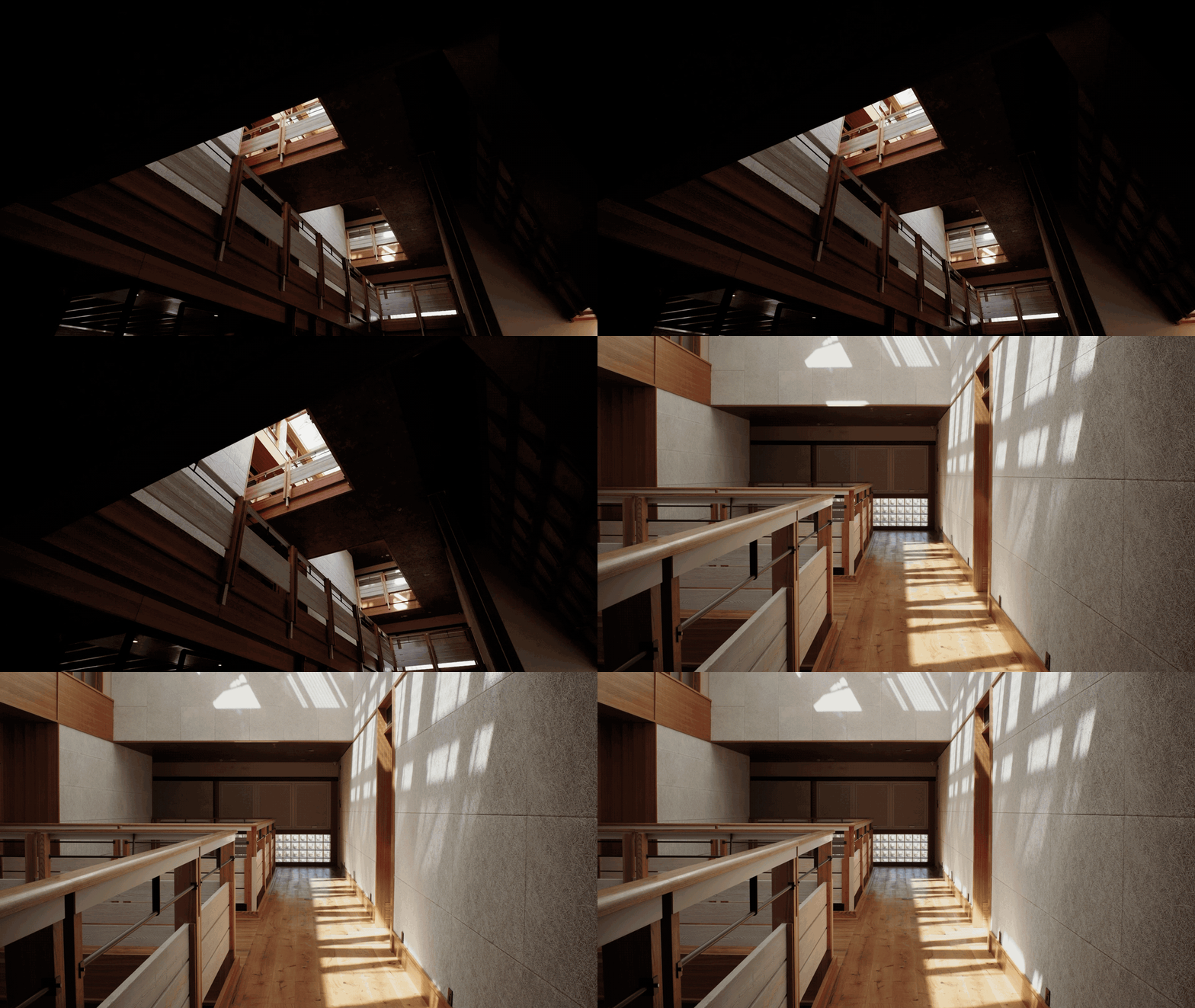
这种沿边界连续展开的界面,也让人联想到寺院中围绕庭院或主空间设置的回廊。它既是通行路径,也是停留、观看与体察之所;空间并非被一次性看尽,而是在回绕行进中层层显现。
也正是在这样的行走过程中,天光自上部缓缓倾入,经格栅、梁架与栏板不断切分、过滤,在墙面与地面上投下游移的斑驳光影,如同藏房中帐幔、经幡与挂布所筛落的微光。于是,中庭所生成的并不只是垂直交通的功能秩序,更是一种由回廊动线与顶部天光共同塑造的空间经验:人在行走、停留与回望之间,逐步感知光线的层次、空间的深度,以及由暗至明、由低向高缓缓展开的内部节奏。
These continuously unfolding edges recall the galleries surrounding temple courtyards and principal halls. They are not only routes of passage, but places for lingering, looking, and sensing. Space is not revealed at once; it appears in layers through circumambulation. As one moves, daylight descends from above and is repeatedly divided by grilles, beams, and balustrades, casting shifting patterns onto walls and floors—like the softened light filtered through curtains, prayer flags, and hanging cloth in Tibetan houses. What the atrium produces, then, is not merely a vertical circulation order, but a spatial experience jointly shaped by the upper daylight and the movement of the surrounding galleries. Through walking, pausing, and looking back, one gradually perceives the layering of light, the depth of space, and an internal rhythm unfolding from dark to light and from low to high.
▽首层抬高、下沉庭院与中庭共同组织出垂直分区,以回应限高条件与场地约束©末广设计

▽©孙海霆

▽走廊栏板的分隔尺度与表面肌理,延续了藏式护墙布幔的构成逻辑,使边界显得轻薄而连贯©孙海霆

附着于中庭立面的米色木丝吸音板,与外立面带有雪水冲刷肌理的白色石材相互呼应,共同激活光照下丰富而细腻的“层次之白”。这种白并非单一而平直的表面效果,而是在材质、界面与环境色温的变化中逐渐丰沛起来,从视觉到触觉都回应着藏房中粗砺与细腻并存的手工气息。墙面上米色吸音板的拼纹、走廊栏板的分隔尺度,以及门窗封板中几何纹样与比例关系,也共同呼应了藏式护墙布幔的构成逻辑。木构梁架、墙面拼纹与栏板尺度彼此配合,形成一种克制而细腻的织物性,使装饰不再是附加其上的表层处理,而是顺着构造关系自然生长出来。
Beige wood-wool acoustic panels attached to the atrium walls interact with the white stone surfaces outside, whose texture recalls the traces of melted snow washing over rock. Together they produce a nuanced and materially rich field of “layered whiteness.” This whiteness is not a flat visual effect, but something that becomes gradually fuller through changes in material, surface, and ambient color temperature. Visually and tactilely, it echoes the coexistence of roughness and delicacy found in Tibetan domestic interiors. The joint patterns of the wall panels, the scale of the gallery balustrades, and the geometric proportions of the window and door panels all subtly recall the compositional logic of Tibetan textile wall hangings. Timber beams, wall joints, and balustrade dimensions work together to create a restrained but tactile fabric-like quality, so that decoration emerges not as applied surface treatment, but as something growing naturally out of tectonic relations.
▽木构梁架、墙面拼纹与栏板尺度彼此呼应,形成一种克制而细腻的织物感,使装饰自然生长于构造之中©朱雨蒙

▽中庭下的停留空间由光线、肌理与家具尺度共同调校,延续了藏房内部粗粝与细腻并置的手工气息©朱雨蒙

天窗采用电动排烟窗,天窗下木梁裸露,延续四层屋盖木结构的视觉逻辑,同时致意传统藏房的顶部天光。正梯形截面的天窗与倒梯形的木梁围合出一处“光的腔体”,承担天窗与吊顶重量的主次梁,不仅是传递荷载的构件,也记录时间的节奏。
白日里,直射光被柔化,光线层层晕染成圈;夜晚,这一空间则化作指引人们归途的温暖“发光器”。
The skylight is designed as an operable smoke vent. Beneath it, exposed timber beams continue the visual logic of the roof structure above while also recalling the roof apertures of traditional Tibetan houses. The upright trapezoid of the skylight and the inverted trapezoid of the beams enclose a “chamber of light,” while the primary and secondary beams that carry the skylight and ceiling do more than transfer loads: they register the rhythm of time itself. By day, direct light is softened into concentric gradations; at night, the atrium becomes a warm glowing core, guiding people back inward.
▽错落的柱列支撑起整片屋盖,在风、光与群山之间形成一处可停留的灰空间©孙海霆

▽钢木混合屋架在大跨度中保持了结构的清晰,也让顶层空间得以通透展开©孙海霆

04. 悬浮屋盖:精神性与日常性的并置
意大利藏学家朱塞佩·图齐指出,藏族的家宅是一个与外部大宇宙相通的“小宇宙”:容纳务实日常生计的同时,又在递进的空间里回应对自然、神灵、人世秩序的理解,宗教性与日常性在同一屋檐下并置。
酒店的顶层被设定为人与神山对话的场所,延续建筑主体的钢结构,屋顶采用钢木混合互承体系,实现 21 m × 9 m 无柱大跨度,使观者得以一览无余地眺望澜沧江河谷与群山,在南侧露台处略作收退,以突出下方建筑白色立方体的简洁有力。
04. The Floating Roof: Between Spirituality and the Everyday
The Italian Tibetologist Giuseppe Tucci once described the Tibetan house as a microcosm connected to the macrocosm outside: a place that accommodates practical daily life while also responding, through spatial progression, to a broader understanding of nature, divinity, and worldly order. The sacred and the ordinary coexist under the same roof.
The top floor of the hotel was therefore conceived as a place of encounter between the individual and the sacred mountain. Continuing the main steel structure of the building, the roof adopts a steel-and-timber hybrid system to achieve a column-free span of 21 by 9 meters, opening an uninterrupted view toward the Lancang River valley and the surrounding mountains. The southern terrace is slightly recessed, reinforcing the clarity and strength of the white volume below.
▽钢木结构屋架细部©末广设计

▽无柱的大开间将雪山引入围坐、停留与凝视的日常之中,使精神性与起居在同一屋盖下彼此并置©朱雨蒙

藏区的哲学实践,无论寺院还是民间:转经、悬挂经幡、绕寺、煨桑等等,被细密编织进日常行为中,“空性”、“无常”等观念通过这些日常的重复而缓慢显形:转经、悬挂经幡,对山、河、云的凝视,共同构筑了在生活层面展开的宇宙观。
六根十字形钢柱支撑整片屋盖,数量少、间距大,承托出屋面的厚重安定,恰与远处水平铺展的壮阔群山相互映照。
Across Tibetan regions, whether in monasteries or domestic life, philosophical ideas are not separated from daily practice. Prayer wheels, prayer flags, circumambulation, incense offerings—these are woven into ordinary routine, allowing notions such as emptiness and impermanence to emerge gradually through repetition. Looking at mountains, rivers, and clouds becomes part of a lived cosmology.
Six cruciform steel columns support the roof. Few in number and widely spaced, they give the roof a sense of weight and repose, while quietly echoing the long horizontal spread of the mountain ranges beyond.
▽云雾蔓延、山景隐去,人依然可以围炉安坐于屋盖投下的庇护之中©朱雨蒙

▽©孙海霆

▽屋架施工照片©末广设计

雾浓顶村一年中只有约三分之一的时间能欣赏到日照金山的壮丽,更多时候寒冷、云多,伴随雨雪,我们希望即使在不见群山和星空的日子里,这个小小的顶层空间依然值得停留;
玻璃将咖啡酒吧厅与中庭及其他区域轻轻分隔,保留光线与视线的通透,让此地成为屋盖之下的一座清透小亭——哪怕云雾缭绕、山景隐去,人也可以安坐壁炉旁,享受醇厚柔和的光影与近乎虚无的空寂。
正如马骅所写:“我最喜爱的不是白,也不是绿,是山顶上被云脚所掩盖的透明和空无。”
千里迢迢、一路风尘地奔赴卡瓦格博峰,付出的辛勤与情绪已超出一般的旅行。从这个角度看,这里更是一间为远客预留的一处“空”:不喧哗,不急于叙事,在旅人与雪山之间留出安静相望的距离。人在屋盖下缓缓走向露台、望向山巅,这一微小而缓慢的行进,本身便是一场使内心逐渐沉静的仪式。
Yet in Wunongding Village, the spectacular “golden mountain” effect of sunrise appears only around one-third of the year; most of the time the weather is cold, cloudy, and often rainy or snowy. We wanted this top-floor space to remain meaningful even on days when neither mountain nor stars are visible.
Glass lightly separates the café-bar from the atrium and adjacent areas, maintaining visual and luminous continuity, so that the room reads like a transparent pavilion beneath the roof. Even when clouds obscure the mountain, one can still sit by the fireplace and inhabit a space of soft light and near-immaterial stillness. As the poet Ma Hua wrote: “What I love most is neither white nor green, but the transparency and emptiness at the mountaintop veiled by clouds.”
To come this far, over such distance and through such weather, in search of Kawagebo, is already more than ordinary travel. In that sense, the upper room is also a reserved emptiness for distant visitors: it does not clamor, nor rush to narrate. It leaves a quiet interval between traveler and mountain. As one walks slowly beneath the roof toward the terrace and the summit beyond, that small, gradual movement becomes a rite in itself, drawing the mind toward stillness.
▽装饰并非“地方性”的简单再现,而是顺着材料与结构的逻辑生长独特表达©朱雨蒙

05. 水、火、中柱:日常去往神圣的时空路径
滇西北地区的藏房,多为三面土墙围合的独栋木构,东南向木结构外露,形成面向庭院的柱廊。柱廊下的灰空间承接日照与风雪,起居始终贴近自然。屋内一侧是炊煮与聚会的火塘,一侧是供奉与祈福的水亭,中柱立于其间,如同撑起屋宇的“小小世界之柱”,在日常与神圣之间划出一条看不见的轴线。
05. Water, Fire, and the Central Column: A Path from the Everyday to the Sacred
In northwestern Yunnan, Tibetan houses are often independent timber structures enclosed on three sides by earthen walls, with their southeast-facing wooden side opening toward a courtyard through a colonnaded edge. This grey zone mediates sunlight, wind, and snow, keeping everyday life closely tied to nature. Inside, one side of the house is organized around the hearth for cooking and gathering, another around the water shrine for offering and blessing, while the central column stands between them like a small axis mundi holding up the house and tracing an invisible line between the sacred and the ordinary.
▽大堂火塘:火塘作为公共空间的中心,将围坐、炊暖与停驻重新组织在一起©朱雨蒙

▽临窗围坐:火与景在同一界面中并置,使停留获得更强的聚拢感与凝视性©朱雨蒙

在这座临山的酒店里,传统藏房中的“水亭”抽象为入口的装置:主入口木门后设一处刻意压低光线与声响的前厅,转角处的黑色镜面如切取出的竖立水面,劈开同心石涡,石涡、窗景与人影叠映在同一画面中,营造无限回旋的深度。
In the hotel, the “water shrine” is abstracted into an installation at the entrance. Behind the main timber door, a deliberately dim and quiet vestibule leads to a turning corner where a black mirrored surface stands like a vertical slice of water. It cuts through a concentric stone vortex, and within the same frame, the reflected stone, framed view, and human figure overlap to create a sense of endless spatial turning.
▽入口前厅:压低的前厅光线与如水面般竖立的黑色镜面,共同构成“由日常迈向神圣”的入口序列©朱雨蒙

▽经由暗廊望见火塘,空间并不被一次看尽,而是在转折与穿行中逐步打开©孙海霆
▽火塘与中柱©孙海霆

藏房中的火塘(hearth)如被带入室内的小型自然景观:火被视为有灵之物,人们围火而坐、敬火而食,礼俗围绕火塘展开,跳动的火焰依附粗砺石材,与室内几何秩序相峙,标记着自然与文化的临界线。
延续对火的敬畏,铜壁炉为“插入”大堂中央的独立重物,周围布置座席:一圈视线,一圈对话,旅途中临时结缘的故事与记忆,被火光框住。在重量与静默的怒江片岩墙与老木条凳的映衬下,火焰成为空间中那缕不稳定、且终将消逝的存在。
The hearth in a Tibetan house is like a small natural landscape brought indoors. Fire is treated as a living presence; people gather around it, eat before it, and organize rituals around it. Its flickering flame, attached to rough stone, stands in tension with the geometric order of the interior, marking a threshold between nature and culture. In the hotel, this reverence for fire continues in a freestanding copper fireplace inserted into the center of the lobby as a heavy independent object. Seating gathers around it, forming a ring of sightlines and conversation. Stories and memories formed in the course of travel are momentarily held within the glow of fire. Against the weight and silence of Nu River schist walls and old timber benches, the flame becomes the unstable and ultimately vanishing presence at the heart of the room.
Taken together, water, fire, and the central column are rewritten as a spatial sequence from inside to outside. Water gathers at the entrance in the form of the black-mirror installation; fire takes the form of the copper hearth in the reception hall; the central column rises through the a
▽回绕的动线使公共区在上行与下望之间不断被重新感知©孙海霆

▽酒店中庭空间与寺院殿堂的柱列与高窗呼应。中柱贯穿上下,建立垂直的空间秩序©孙海霆

06. 餐厅:被温柔稀释的马列维奇
餐厅平面由砖砌体块、台阶与平台组织而成:入口、旋转 45° 的壁炉休息区、包间与面向庭院的落地窗在同一空间连续展开。“建筑结构室内化”的方式,室内只保留陶砖、木和石。陶砖通过统一的模数控制,并在砌法与厚度上形成变化,以柱、矮墙及不同尺度的体块呈现:既为结构,也是家具与界面。
06. The Restaurant: Malevich, Gently Diluted
The restaurant plan is organized through brick masses, steps, and platforms. The entrance, a fireplace lounge rotated by 45 degrees, private dining rooms, and full-height windows facing the courtyard unfold continuously within one shared space. Using a strategy of “interiorizing architectural structure,” the interior is reduced to brick, wood, and stone. Bricks follow a consistent module while varying in bond and thickness, appearing as columns, low walls, and blocks of different scales that function simultaneously as structure, furniture, and partition.
▽餐厅与壁炉:不同标高与体块转折,让公共空间更接近日常围坐与停留的尺度©朱雨蒙

▽砖的尺度与平台边界,使餐厅保留了日常起居的亲近感©孙海霆

▽行走过程中,视线在厚墙、框景与漫光之间不断被收束与放开©朱雨蒙

木饰吊顶在天花呼应砖体节奏,在局部形成框景,把视线引向庭院与山坡。强烈的高原阳光被庭院台阶和挡墙打散,再由砖与石反射为柔和漫射光,在凹凸肌理上投下缓慢移动的痕迹。
A timber ceiling responds to the rhythm of the brick masses and occasionally frames views toward the courtyard and hillside. Intense plateau sunlight is first broken up by the courtyard steps and retaining walls, then reflected by brick and stone into a softer diffuse light that moves slowly across textured surfaces. As one walks through the restaurant, shifts in position occur through the passage between built masses: from the bright main hall down to a lowered booth, then up along the brick plinth to a daybed by the window, recalling the Tibetan preference for sitting together in an encircling arrangement.
▽木顶、砖墙与石材界面共同将餐厅气氛调低为一种更温柔的聚会状态©孙海霆

▽餐叙空间以质朴材料回应“坐下来,慢慢吃饭”的日常节奏©朱雨蒙

人行其中,在穿越体块中完成位置转换:由明亮大厅走向低位卡座,顺砖台抬升至靠窗长塌,回应藏区日常生活中对围坐的偏好。虽有略带至上主义气质的空间秩序,但砖的尺度、木的纹理、石地的触感与编织座面,又不断提醒来客此处是坐下吃饭、围坐聊天的寻常餐厅。那些被压缩成几何抽象体块的“马列维奇式冲动”,最终被消解为具体而缓慢的一幕幕日常。
Although the spatial order carries a slight Suprematist quality, the scale of the brick, the grain of the wood, the tactility of the stone floor, and the woven seating surfaces continually remind the visitor that this is an ordinary dining room—a place to sit, eat, and talk. The geometric impulses that might otherwise tend toward abstraction are softened and dissolved into slow, specific scenes of daily life.
▽墙体既是结构,也是家具与路径的生成方式©孙海霆

此次酒店公共区域的坐垫与靠包,采用了大量来自甘孜州、理塘及甘南一带藏族牧民的手工织布与牦牛皮。牧民们在放牧与转场的间隙,以家庭作坊的方式取毛、捻线、织布、揉皮,其收入既用于补贴日常生活,也投入到植草治沙等生态修复之中。
我们与牧民的合作遵循家庭作坊的节奏,而非以标准化与效率为先。设计过程中,我们尊重并保留她们原有的配色与配线方式,不对传统图案作出修改,并在协作中为气候变化与农牧节律预留充足的时间弹性。织作多发生在农闲间隙的交谈之中,尺寸难以完全统一,跳线与色差亦在所难免。
基于此,我们制定了后期拼接的规则,通过花边缝合不同布料,尽量避免裁剪牦牛布,将这些不可避免的手工误差转化为一种更为野生而粗粝的布艺表达。织物的触感、木门的分格比例、手工制作的桌几与略低的椅背,乃至为牦牛布门帘配上一只叮当作响的铜铃——这些细微而克制的设计选择,共同构成了入住体验的一部分,也在不经意间沉淀为记忆中的声音与触感。
The cushions and backrests used in the hotel’s public areas were made from handwoven textiles and yak leather sourced from Tibetan pastoral communities in Ganzi, Litang, and Gannan. In these family workshops, herders spin, weave, and work leather in the intervals between grazing cycles and seasonal movements. The income supports daily life, but also ecological restoration efforts such as grass planting and sand control. Our collaboration followed the rhythms of these workshops rather than the demands of standardization and efficiency. We respected their original color palettes and weaving methods, making no changes to traditional motifs, and allowed generous time in the design process for the interruptions and seasonal rhythms of pastoral life. Since weaving often takes place informally during agricultural downtime, dimensions can vary, and irregular threads and color differences are inevitable.
Rather than erase these variations, we established stitching rules in post-production: different fabrics were joined with decorative edging, and cutting of the yak-wool cloth was minimized. In this way, unavoidable hand-made discrepancies became part of a more direct and rough textile language. The texture of the woven fabrics, the proportions of timber doors, the hand-made tables, the slightly lowered chair backs, even the small copper bell attached to a yak-wool curtain—these quiet decisions form part of the experience of staying here, settling in memory as sound and touch as much as image.
▽织物与手工合作:在理塘与甘南牧区选取并合作完成的布艺与织物,为空间带来真实而具体的在地触感©刘达(Gif)


▽手工织物样带:公区布艺的材料原型,保留了编织、拼接与手作留下的时间痕迹©末广设计(Gif)


07. 客房如“家”
客房被当作“家”来设计:相较高效的住客动线,我们在意的是逗留、对话与游离的可能。
通过正交体系与非正交体系之间的几何扭转,我们刻意营造房间与房间之间的模糊联系,而非一种线性、从“开始”到“结束”的空间体验。平面中非规整的过渡空间呈现出活泼而松动的状态,用以调节整体建筑的空间氛围。
在此基础上,我们尝试构建一种去中心化、无明确边界的动态空间结构,使各个区域在离散关系中呈现出“摇曳、颤动”的气质。身体的行进与光线的挪移相互叠加,共同生成一种偏离日常经验的空间感受。
入口处更衣换鞋的玄关、围炉而坐的沙发区、抬高的床塌、窗边的书桌与浴缸,被组织为一串连续展开的“起居岛屿”。它们在平面与立体层面彼此串联,有的通过弧形楼梯通向上层房间,从而取代了传统“走廊—床—卫生间”的公式化往返。
07. Guest Rooms as Domestic Interiors
The guest rooms were conceived as rooms of living rather than as efficient hotel units. More than optimized circulation, we were interested in the possibility of lingering, conversing, drifting, and inhabiting.
Through a geometric interplay between orthogonal and non-orthogonal systems, we deliberately created ambiguous relations between one room and another, rather than a linear sequence with a clear beginning and end. Transitional spaces in the plan take on a loose and lively character, helping modulate the atmosphere of the building as a whole. From this basis, we sought a decentralized and dynamic spatial structure without rigid boundaries, in which discrete zones relate to one another in a gently oscillating state. The movement of the body and the movement of light overlap, producing a spatial perception that slightly departs from everyday expectation.
An entry vestibule for changing shoes, a sofa area gathered around the stove, a raised bed platform, a desk and bathtub by the window—these elements are arranged as a sequence of domestic “living islands.” Linked in both plan and section, some connect to upper-level rooms by curved stairs, replacing the formulaic back-and-forth of corridor, bed, and bathroom.
▽围炉、借景与停留彼此松动相连,取代了单一线性的住客动线©孙海霆

▽半高界面与连续台面增强了客房中“可停留”的日常性©孙海霆

▽床榻与窗景:山景并未直接压入室内,而是在木格栅、床榻与窗框之间被缓慢框定©孙海霆

房间以半高矮墙、木格栅、书架与布帘分隔,折转视线,减少真正阻断。天花高度略低于常规酒店,梁的节奏更为细密,窗洞被压缩成适合倚靠的宽度,增强给人的包裹感。
高原光线强烈且多变,上下午截然不同的光线赋予房间多重气质。开窗位置、檐口深度和室内尺度共同参与“调光”,把窗洞强化为带厚度的洞口,窗框与塌合并设计,成为可倚靠的景观座。不同户型顺着不规则的景观朝向展开, 转角套房的窗洞扭转45°:清晨室内偏暗,视线被窗外耀眼的缅茨姆峰锁定;下午阳光转向房间一侧,光线逐一扫过床头、书桌与沙发,室内愈发明亮温暖。
Rooms are divided by half-height walls, timber screens, shelves, and curtains that turn the line of sight without fully cutting it off. Ceiling heights are slightly lower than those of a conventional hotel, beam rhythms are denser, and the window openings are compressed to a width suited to sitting against, giving the rooms a stronger sense of enclosure.
Plateau light is intense and changeable, and the atmosphere of a room shifts dramatically between morning and afternoon. Window position, eave depth, and interior scale all participate in modulating light. The windows are treated as thick openings; the frame and daybed are designed together, forming a place to lean and look. Different room types unfold according to irregular view orientations. In the corner suites, windows turn by 45 degrees: in the morning the room remains relatively dim, while the brilliant summit of Mianzimu holds the gaze outside; by afternoon the sun reaches the side of the room, gradually passing over bed, desk, and sofa, and the interior becomes warmer and brighter.
▽折转的视线与被压低的局部空间,共同强化了内部的包裹感©孙海霆

▽客房窗边坐榻:光线在不同界面之间游移,使客房在一天之内呈现出不同情绪©孙海霆

客房软装与配饰以家常的方式渗透进每个角落:厚实的羊毛毯与亚麻床品、可随手挪动的圆几、窗边与楼梯口一小段可坐下来的台面。设计的精力更多放在照片难以捕捉的细节之中,使这些被精心编排的局部最终汇聚为连续而丰富的感官体验。
色彩的处理取意于唐卡绘画中的传统主色,我们以矿物颜料为木皮染色,将客房的色彩控制在木色、奶油色与灰蓝之间,偶以一抹蓝绿拉出环绕的“色带”,承托家具;搁板、壁龛和矮柜刻意留白,作为书、花枝与旅途中捡到小物件的背景板。
Soft furnishings and accessories enter the rooms in an almost domestic manner: thick wool blankets, linen bedding, movable side tables, short ledges by windows and stair landings where one can sit briefly. Much of the design effort was invested in details that photography rarely captures, so that these carefully composed fragments might ultimately gather into a continuous and layered sensory experience.
Color was derived from the principal tones of thangka painting. Mineral pigments were used to stain wood veneer, keeping the palette of the rooms within wood, cream, and grey-blue, occasionally pulled together by a blue-green band wrapping around the furniture. Shelves, niches, and low cabinets are intentionally left sparse, becoming backgrounds for books, branches, and small objects found in the course of travel.
▽客房色彩与材质:矿物色、木皮与布艺经过反复校准,形成收敛而细腻的客房色谱©末广设计(gif)

▽木色、奶油色与灰蓝构成稳定基调,一抹蓝绿将家具与壁面轻轻牵连©孙海霆

▽客房壁龛与家具细部:局部亮色并非装饰性的强调,而是为空间留下一处更鲜明的停驻节点©朱雨蒙


08. 后记
近两年,事务所的项目主要集中在甘孜州—玉树州—迪庆州一带,我们持续从宏观的山水格局、聚落形态到微观的植物、织物与木作细部展开调研与实践。一次次走访中,愈发体会到在地的智慧:所谓“装饰”,并非事后覆在建筑表面的皮,而是沿着日常使用与构造逻辑缓慢生长出的“美”。它根植于材料与结构之中,表达直接、开放、大胆,又极富想象力;美、结构与装饰在这里融为一体,只是同一事物的不同侧面。
08. Postscript
Over the past two years, much of our work has been concentrated across the regions of Ganzi, Yushu, and Diqing. Our research and practice have continued at multiple scales, from broad mountain-and-water landscapes and settlement patterns to the specific textures of plants, textiles, and timber details. Through these repeated visits, we have become increasingly aware of a particular local intelligence: what is called “decoration” is not a layer applied after the fact, but a form of beauty that grows slowly from use and tectonic logic. Rooted in material and structure, it is direct, open, bold, and highly imaginative. Here, beauty, structure, and ornament are not separate categories, but different aspects of the same thing.
▽田野踏勘:对在地材料与工法的持续追踪,使设计判断建立在真实触感之上©末广设计


我们更愿意把这家酒店视作山边一处歇脚的客栈:嘈杂的周遭里,以克制而温暖的内部空间,为身体与情绪提供短暂的安放之所。设计并不试图复现某种想象中的“原真图景”,而是将行走中获得的理解与片段式的采撷,谨慎地嵌入空间、材质与色彩之中。这些线索并不构成明确的叙事,而是如同散落其间的暗号,等待被偶然感知与各自解读。
We prefer to think of this hotel as a wayside inn by the mountain: within a noisy setting, its restrained and warm interior offers temporary shelter for both body and emotion. The design does not attempt to reproduce an imagined authentic scene. Rather, it carefully embeds fragments of understanding gathered through walking—through space, material, and color. These clues do not form a singular narrative. They are more like dispersed signals, waiting to be sensed by chance and interpreted by each visitor in their own way.
▽围炉、坐具与露台在同一开间中展开,构成一处可长时间停留的山景客厅©孙海霆

▽©朱雨蒙

我们始终对与康巴文化紧密相连的山川水系怀有敬意与好奇,因此在表达上刻意保持中性的姿态,不以煽情的语言或符号化的手法去消费这片土地,避免将复杂而真实的他者压缩为供自身使用的“精神风景”。借由项目,我们以近乎田野调查的方式进行记录与学习,试图从中汲取那些既扎根于日常生活、又能与当下现实坦诚相处的设计启发。于我们而言,设计并非抵达某种确定的答案,而是一场持续发生于心灵之中的行动:在真实面前,为自己的灵魂勾勒出一个可以栖居的、想象中的卡瓦格博地区。
We remain curious about, and respectful toward, the mountains and river systems deeply entwined with Khampa culture. For this reason, the project deliberately adopts a neutral tone of expression, avoiding sentimental language and symbolic appropriation, and resisting the reduction of a complex and living otherness into a spiritual backdrop for our own projection. Instead, the project became a form of near-fieldwork: an effort to record, to learn, and to draw from modes of making that remain rooted in everyday life while staying honest to contemporary reality. For us, design is not the arrival at a final answer, but an ongoing action of the mind: before reality, it is a way of sketching, for one’s own soul, an imagined place to dwell in the region of Kawagebo.
▽首层轴测 / “水—火—中柱”平面关系:入口、水亭、火塘与中柱共同构成一条由日常通往神圣的时空路径©末广设计

▽酒店负一层轴测:入口、壁炉区、包间与庭院开口被组织为一段连续展开的地下公共空间©末广设计

▽客房轴侧:玄关、围坐、床榻、书桌与浴缸被组织为一串连续展开的“起居岛屿”©末广设计

项目名称:大乐之野(德钦梅里雪山店)
项目地址:云南省德钦梅里雪山国家公园十三塔观景台
建筑面积:2500㎡
建筑|室内及软装|景观整体设计:上海末广设计事务所
主持建筑师:李佳颖、冯昕
胶片摄影:孙海霆
数码摄影:朱雨蒙、刘达、末广设计
媒体公关:成卿
美术造型:FC
陈设支持:URBAN LIVING
业主单位:上海山海有野酒店集团有限公司
结构设计:马智刚
木结构咨询:iStructure|彭超、吴琨营 ;罗托Rothoblaas|姚悦
机电团队:何春会、刘红菲、魏天亮
灯光设计:上海影哲照明设计有限公司
施工团队:上海野有筑装饰工程有限公司
布艺:几见|AtelierSo工作室
面料供应:甘孜尼热织手工毯、青海噶瑟工贸、新德里秘密、Parallel朴昕
家具制作:成都千树、NAZA哪吒家具设计、梦珂
艺术漆供应:上海贡颜新型材料科技
金属构件支持:上海巨诺实业有限公司
设计时间:2022年11月——2023年9月
竣工时间:2025年7月
Project:Kawagebo Snow Mountain Hotel, Yun Nan,China
Location:Thirteen Pagodas Viewing Platform, Kawagebo Snow Mountain National Park, Deqin, Yunnan, China
Area:2,500 sqm
Design:Moguang Studio
Design Scope:Architecture, Interiors, Furnishings, Landscape
Principal Architects:Jiaying Li, Xin Feng
Client:Shanghai Shanhai Youye Hotel Group Co., Ltd.
Structural Design:Zhigang Ma
Timber Structure Consultants:iStructure (Chao Peng, Kunying Wu); Rothoblaas (Yue Yao)
MEP:Chunhui He, Hongfei Liu, Tianliang Wei
Lighting Design:Shanghai Inverse Lighting Design Co., Ltd.
Construction:Shanghai Yeyouzhu Decoration Engineering Co., Ltd.
Textiles:Jijian; AtelierSo Studio
Fabric Suppliers:Ganzi Nire Handwoven Carpets; Qinghai Gase Industry & Trade; New Delhi Secret; Parallel Puxin
Furniture Fabrication:Chengdu Qianshu; NAZA Furniture Design; Mengke
Decorative Paint Supplier:Shanghai Gongyan New Material Technology
Metalwork Support,Shanghai Juno Industrial Co., Ltd.
Film Photography:Haiting Sun
Digital Photography:Yumeng Zhu, Da Liu, Moguang Studio
Media & PR:Qing Cheng
Styling:FC
Furnishing Support:URBAN LIVING
Design Period:November 2022 – September 2023
Completion:July 2025
“设计以克制的姿态、朴素的敬畏与温柔的留白,在人与神山之间,塑一处脚可暂歇、心可安放的所在。”
审稿编辑:Maggie
更多 Read more about:末广建筑


0 Comments