
本文由末广建筑授权mooool发表,欢迎转发,禁止以mooool编辑版本转载。
Thanks Moguang Studio for authorizing the publication of the project on mooool, Text description provided by Moguang Studio.
末广建筑:2024年以杭州亚运为契机,中国美术学院•视觉传播学院联合杭州万科发起“边角空间新生计划”,计划关注城市中那些被忽视的“剩余空间”,重新定义日常生活中被遗忘的角落:无论是社区湖面、桥下空地,或是写字楼内的闲置区域。从1m²到1m³,计划通过微介入激发微更新,唤醒城市的潜力,为500米生活圈的居民带来日常的便捷与温度,推动城市的有机生长。
Moguang Studio:In 2024, leveraging the momentum of the Hangzhou Asian Games, the China Academy of Art ·School of Communication & Design , together with Hangzhou Vanke, launched the “Urban Micro-Space Regeneration Plan” This project focuses on overlooked “residual spaces” scattered throughout the city—those forgotten corners of everyday life such as community lakesides, vacant lots beneath bridges, or underused areas inside office buildings. Ranging in size from 1m² to 1m³, the initiative seeks to spark micro-renewals through micro-interventions, awakening the city’s hidden potential and bringing convenience and warmth to residents within a 500-meter living radius—ultimately promoting the organic growth of urban life.
▽改造后的褶褶亭,成为凝聚人气的公共客厅 ©吴清山


▽开放而自由的场域,让每个人都能重塑并自在使用 ©吴清山


我们在总策划人姜珺老师的邀请下参与“边角空间新生计划”的第二站——运河万科中心站。 本次待改造的凉亭位于杭州运河万科中心A区中央广场。 作为一处建成三年的办公与住宅混合园区,这里始终缺乏一个能承载户外活动、促进邻里交流的开放空间。 凉亭虽占据园区中央的核心位置,但18米直径的亭下空间尺度显得过于庞大,缺乏与人体建立亲密关系的中小尺度层次,且缺少引导停留和互动的设施,久而久之,沦为园区人们匆匆穿行的通道。
At the invitation of chief curator Professor Jiang Jun, we took part in the second site of this initiative: Vanke Center at the Grand Canal. The pavilion to be renovated is situated in the central plaza of Zone A within Hangzhou’s Vanke Center. Although this mixed-use office and residential complex has been completed for three years, it has long lacked a true open space that supports outdoor activities and fosters neighborhood interaction. Despite occupying a prime central location, the pavilion—with its 18-meter diameter—feels overly vast and disconnected from the human scale. It lacks smaller, intimate layers that invite interaction and contains no elements that encourage lingering. Over time, it has become merely a corridor for people passing through.
▽改造前的凉亭,空旷难聚集、难停留 ©末广建筑

有趣的是,凉亭一侧、与之相对的公园小径和绿化斜坡,则因尺度宜人、被树丛环绕的自然氛围地形吸引了更多社区居民:孩子们在斜坡上奔跑玩耍,大人们随意落座小憩,此地成为园区生活的一处微妙重心。
Interestingly, the adjacent park path and landscaped slope—on the opposite side of the pavilion—have naturally attracted more community residents thanks to their human-scale proportions and tree-shaded, relaxing atmosphere. Children run and play on the slope, while adults casually sit and rest. This subtle zone has become an unexpected focal point of communal life within the complex.
▽当地居民自发聚集在小区的景观斜坡处休憩玩耍 ©末广建筑

改造的核心是在极限预算下,如何让这个尺度偏大、气质严肃的凉亭,重新成为人们愿意停留的空间,并唤起身体的松弛与趣味感? 我们将解题的线索放在亭外起伏柔软的地景语言上,并尝试将这种语言延伸至亭内,以此打破原有的冰冷硬质铺地带来的单调,赋予新的场所温度。
The core of our renovation lies in this question: How can we, with a minimal budget, transform this oversized and solemn pavilion into a space where people want to linger—one that invites playfulness and physical ease? We found inspiration in the soft, undulating landscape outside the pavilion and extended this design language inward, breaking up the cold, rigid paving with new textures and forms that bring warmth and intimacy to the space.
▽“褶褶亭”兼具功能与趣味,可满足多种姿态与使用场景。 白天,它是办公人群的休憩地,傍晚,则成为家庭游戏与聚会的场所 ©吴清山

小时候,我常被母亲提醒“好好走路”,可相比平整的道路,路边不规整的小坡、小坎、小水坑更具有吸引力,让我蹦跳穿行、闪躲腾跃,难免磕绊跌倒,却也乐在其中。
As a child, my mother often reminded me to “walk properly.” Yet for me, it was always the irregular little slopes, curbs, and puddles along the roadside that were most captivating. I would hop, dodge, and leap through them—sometimes falling, but always enjoying myself.
▽一旦出现孩子聚集的场景,就会吸引来更多的家长与孩童 ©梅可嘉


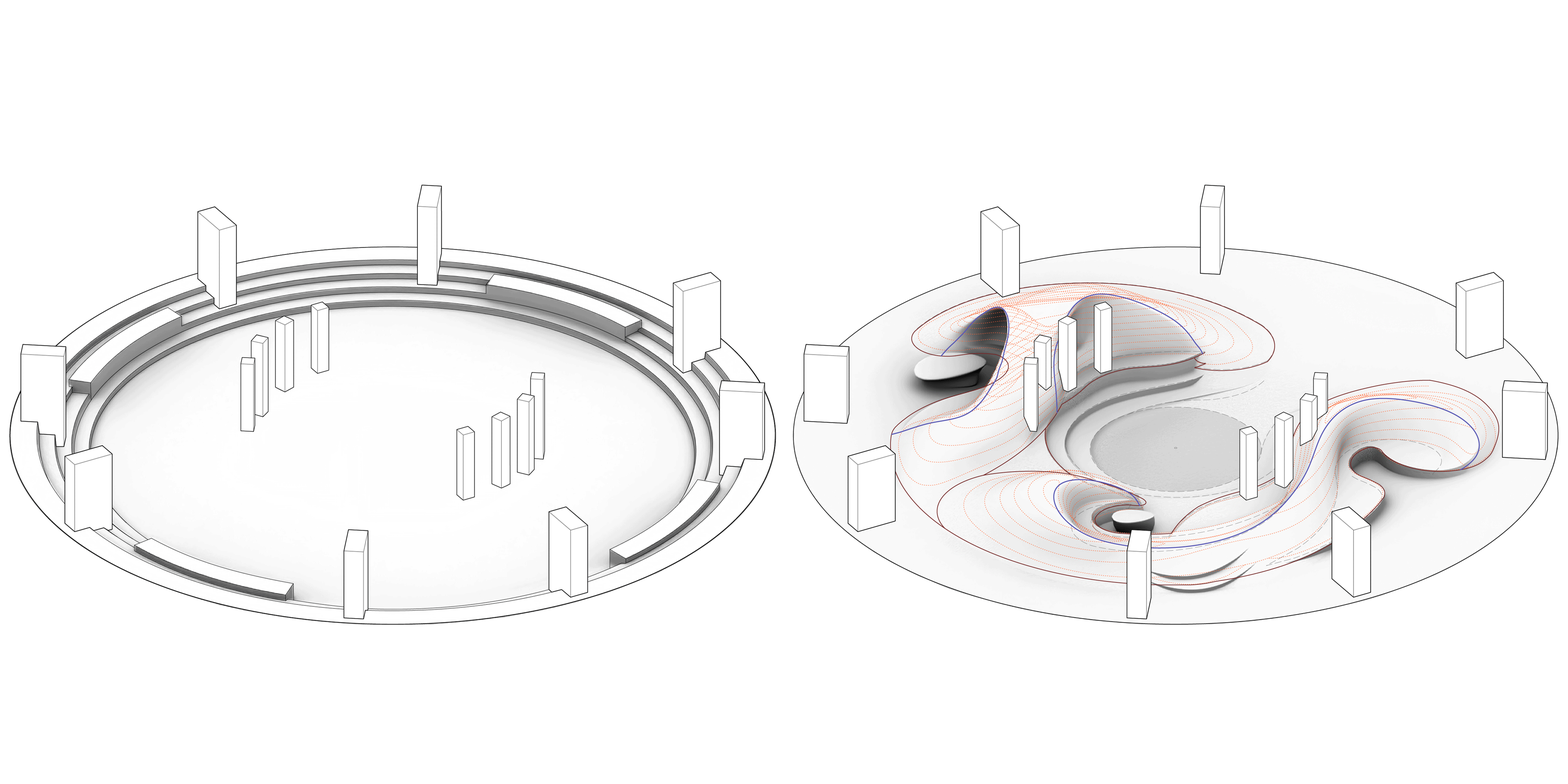
亭子中置入褶皱起伏的地景,创造与身体有机而真实的联结,而非简单安插一组“游戏装置”。 褶子,本身就是“两者之间的褶子”,营造出自由、亲密以及内外并存的可能性。 起伏的褶皱地景将直径18米的圆亭划分为内外两层:内侧为集中性的舞台空间,外侧则随褶皱的延展自然围合,形成一系列贴近身体尺度的私密角落,吸引人们停留游憩。 这组地景看似开放,却在暧昧的围合与流动之间,悄然创造微妙的亲密感,使人在其中遇见那些未被预设的人与事。
Now, the pavilion features a pleated, undulating landscape that fosters a genuine, organic connection between the body and space—far beyond the function of a simple “play structure.” The pleat itself represents an “in-between” space—a zone of freedom, intimacy, and blurred boundaries between inside and outside. This landscape redefines the 18-meter circular pavilion into two spatial layers: a central, stage-like area for gathering, and a more intimate outer ring. Here, the folds extend naturally outward, forming a series of cozy, human-scaled pockets that invite people to stop, rest, or play.
▽平面动线生成 ©末广建筑

▽改造前后的内外皱褶 ©末广建筑
▽亭下碰头 ©末广建筑

▽皱褶外侧,内凹曲面营造出私密独处的小空间(改造前后对比)©吴清山
@吴清山.gif)
▽中心舞台兼具多功能属性,既是儿童嬉戏的游戏场,也是社区年轻人聚会与表演的空间

地面不只是承载行走的表面,它是身体的延伸与回应——可坐、可躺、可攀爬,既能承载静谧的休憩,也能激发日常的运动,适合独处,也鼓励交流与共享。在这一片区域我们融入“Jump”的轻松氛围,打造兼具艺术感与游乐趣的体验场景——不仅是身体的参与,更是一场城市的感知与发现之旅。亭子在改造中获得了多样的新场景,因此也得到全新的名字——“褶褶亭”。
Though seemingly open, the landscape subtly nurtures closeness through its flowing forms and partial enclosures, quietly enabling chance encounters and spontaneous moments. The ground is no longer just a surface for walking—it becomes an extension of the body: a space to sit, lie down, climb, or pause. It invites both peaceful rest and spontaneous movement, solitude and connection. In this zone, we infused a sense of playfulness—the spirit of “Jump”—to create a space that is both aesthetically engaging and physically stimulating. It’s more than a place to move—it’s a sensory journey of urban discovery. With its renewed form and atmosphere, the pavilion has gained a new name: “The Wave Pavilion.”
▽起伏的地景承载了不同年龄的生活片段:孩子们玩耍、长者休憩、年轻人晒太阳、交流与小聚 ©吴清山

▽跳跃,不只是游戏动作,更是用身体触摸城市、感知节奏、探索边界的方式 ©吴清山


除了引入新的地景语言,我们也利用原有结构,增设了与地面呼应的镜面吊顶。 褶皱起伏的地景又有“山”的意象,山自然聚人,“人”与“天、地”的关系微缩于亭内,使其在有限之中生成天地交感的诗意。与“地景”呼应的镜面“天穹”引发人与空间的视觉互动:它映照天光流转,引导人的身体节奏。地景可动亦可静,而人的动静,也因天穹的变幻而生出不同感知。这一切,待亭中之人,以身体为媒,去探索、感受与体验。
In addition to the landscape intervention, we reimagined the pavilion’s existing structure by introducing a mirrored ceiling that reflects and complements the forms below. The undulating ground evokes a mountainous terrain—natural forms that have long drawn people together. Within the pavilion, the relationship between heaven, earth, and humanity is poetically condensed into one shared space. This mirrored “sky dome” encourages visual interaction between people and their environment. It reflects the shifting sky and sunlight, guiding the rhythm of bodily movement. The landscape invites both motion and stillness, and as the mirrored ceiling transforms with the light, the human experience evolves in response. This is a space to be explored, felt, and understood through the body.
▽改造后的‘褶褶亭’夜景 ©吴清山

当夜幕降临,光线透过公园的树丛悄然洒落,亭中的灯光缓缓亮起,起伏的地景温柔地漫反射着顶上的暖光。灯光、人影与自然叠加交融,勾勒出一幅温暖而富有生活气息的城市夜景画卷。
As night falls, gentle light filters through the park’s trees, and the pavilion gradually glows from within. The undulating ground softly reflects the warm ceiling lights, and the interplay of shadows, silhouettes, and nature paints a rich, intimate portrait of urban life after dark.
▽微缩进亭内的“天”与“地” ©末广建筑

▽小天地 ©吴清山

▽用尽之间照见身体 ©吴清山

▽天地之间回望 ©吴清山


▽小天地间的游戏 ©末广建筑
项目名称:运河褶褶亭·边角空间新生计划
项目地点:杭州运河万科
改造面积:240㎡
设计时间:2023年11月-2024年7月
建成时间:2024年7月
策展:姜珺 | 中国美术学院 · 视觉传播学院 · 社会与策略研究所
出品单位:张炎丨大屋顶文化艺术中心
业主单位:运河万科
设计单位:冯昕、李佳颖丨末广建筑Moguang Studio
摄影:吴清山、梅可嘉
Project Title: Wave Pavilion · Urban Micro-Space Regeneration Plan
Location: Vanke Center, Grand Canal, Hangzhou
Renovated Area: 240㎡
Design Period: November 2023 – July 2024
Completion Date: July 2024
Curator: Jiang Jun | Institute of Social & Strategic Research, School of Communication & Design,China Academy of Art
Producer: Zhang Yan | The Roof Culture & Arts Center
Client: Vanke · Grand Canal
Design Team: Feng Xin, Li Jiaying | Moguang Studio
Photography: Wu Qingshan, Mei kejia
“设计以微介入激发微更新,唤醒城市的潜力。”
审稿编辑:Maggie
更多 Read more about:末广建筑


0 Comments